
There is something undeniably magical about those fleeting moments when the sun hovers just above the horizon. Whether you call it the golden hour, dusk, or twilight, this special time of day has inspired poets, artists, photographers, and nature lovers for centuries. In a world that moves at a fast pace, pausing to witness the natural glow of a sunset or sunrise is one of the simplest yet most profound ways to connect with ourselves.
A captivating short video titled “Sunbeam,” created by Alf Blop, perfectly captures this essence in a brief 42-second showcase of pure visual peace. Set against a calm waterfront park backdrop, the video serves as a gentle reminder of the stunning beauty that surrounds us when we take a moment to stop and observe.
In this article, we will explore the elements that make this visual piece so compelling. We will look into the science and psychology behind why natural golden light captivates us, share practical tips for capturing your own sunset masterpieces, and reflect on the healing power of nature’s daily light show.
Deconstructing the Scene: The Visual Magic of “Sunbeam”
At first glance, the video offers a picturesque, almost dreamlike landscape. But when you examine the composition, timing, and environmental factors, you quickly see why this scene resonates with viewers.
- The Horizon and Water Reflection
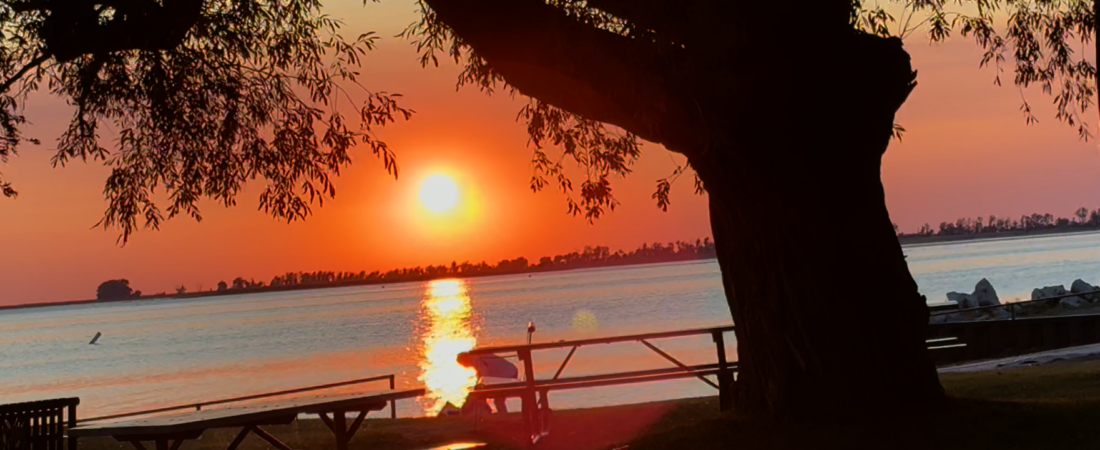
The focal point of the shot is the radiant sun resting low over a wide expanse of calm water. As the sunbeams stream through the atmospheric haze, they cast a brilliant shimmer across the lake or bay. The water acts as a natural mirror, doubling the light intensity and creating a symmetrical bridge of liquid gold that stretches directly toward the viewer. The subtle ripples on the water soften the reflection, giving it a gentle glow that feels deeply relaxing. - The Framing Silhouette of the Majestic Tree
Frame composition plays a key role in visual storytelling. In “Sunbeam,” a large tree with a wide canopy stands prominently on the grassy shore, dividing the scene. Its lush leaves and thick branches form a silhouette against the fiery orange sky, creating a strong contrast between dark foreground elements and vibrant light behind it. This technique, known in visual arts as “natural framing,” draws the eye inward toward the sun while providing a sense of scale, shelter, and permanence. - The Atmosphere of a Quiet Public Park
Beneath the sweeping branches of the tree, classic wooden picnic tables and park benches face the water. To the far right, a quiet community playground sits under the soft evening light. These elements introduce a human touch to the landscape. They evoke memories of summer gatherings, quiet morning coffee, afternoon picnics, and contemplative walks along the shoreline. - Human Presence in Harmony with Nature
Near the water’s edge, by the base of the tree, a solitary figure moves quietly, taking in the view. This subtle human element grounds the scene in reality. It shifts the narrative from an abstract landscape to an authentic, relatable experience. Watching someone stand peacefully by the shore creates an empathetic response, making the audience feel as if they are right there with them. - Color Palette and Atmospheric Flares
The sky transitions through a range of warm tones, starting from deep fiery orange near the sun and fading into soft magenta, coral pink, and delicate lavender in the upper atmosphere. As the camera pans gently across the lawn, natural lens flare artifacts glow subtly on the screen. Far from being a flaw, these warm optical flares enhance the cinematic quality of the footage, giving it an authentic, nostalgic warmth.
The Science of Light: Why Sunsets and Sunbeams Heal Us
Have you ever wondered why looking at a sunset brings about a sense of calm? The psychological and physical effects of golden light are rooted in human biology.
Circadian Rhythm Alignment
Human evolution has linked our biological clocks to the color temperature of natural light. High-angle mid-day sunlight contains high amounts of blue light, signaling alertness to our brain. But as the sun drops lower, the atmosphere scatters short blue wavelengths, allowing longer red, orange, and yellow wavelengths to pass through. This soft, low-angle light tells our suprachiasmatic nucleus, the brain’s master clock, that the day is winding down, leading to the gentle release of melatonin and lower cortisol stress levels.
The Power of Awe and Dopamine
Psychologists who study environmental aesthetics often talk about the concept of “awe”—an emotion dedicated to experiencing vastness that goes beyond our normal understanding of the world. Standing before a large body of water bathed in golden sunlight puts us in a mindful state. It pulls us away from our internal chatter, redirecting our focus to the immediate environment. Studies have shown that feeling awe boosts positive emotions, encourages generosity, and improves overall mental health.
How to Capture Your Own “Sunbeam” Moments: Tips for Photographers and Videographers
If the video inspires you to grab your camera or smartphone, here are essential tips for capturing impactful sunset and golden hour footage:
Understand the Golden Hour Window: Golden hour happens twice a day: during the first hour after sunrise and the last hour before sunset. Plan to arrive at least 30 minutes early to scout your location, set up your equipment, and adjust your framing.
Expose for the Highlights: When shooting directly into the sun, cameras often struggle to balance dark shadows and bright skies. Manually tap or adjust your exposure lock on the brightest area near the sun to prevent blown-out whites and keep rich color saturation in the sky.
Incorporate Foreground Elements: A plain sky can seem flat. Add depth to your shot by placing foreground objects—such as trees, benches, docks, or silhouettes—between your lens and the horizon.
Use Water to Your Advantage: Position yourself low to the ground near water to maximize light reflection. A still morning lake offers a crystal-clear reflection, while gentle waves create shimmering light trails.
Embrace Natural Lens Flare: Let light strike the edge of your camera lens at an angle to produce warm light leaks and flares that add an organic, cinematic feel to your video.
Final Thoughts: The Art of Slowing Down
In an age filled with short-attention-span media and constant notifications, a peaceful 42-second glimpse of nature like “Sunbeam” provides an oasis of calm. It reminds us that no matter how chaotic life becomes, the sun continues its steady path, painting the sky with breathtaking artwork every day for anyone willing to pause and enjoy.
Whether you visit a local park, sit by a quiet riverbank, or simply look out your window during twilight, make it a habit to find your own sunbeam moments. Take a deep breath, leave your stress behind, and let the warmth of nature’s light restore your spirit.
Author & Creator: Alf Blop
YouTube Channel: Alf Blop
Copyright: © All Rights Reserved by Alf Blop. Unauthorized reproduction or redistribution of this content without explicit written permission is strictly prohibited.