
There’s a certain magic that fills the air when summer arrives and a close-knit community turns its streets into an open-air museum of automotive history. The Wallaceburg Classic Car Show captures this magic perfectly, offering an immersive journey through the golden era of automobiles. For car enthusiasts and casual onlookers alike, events like this are more than just displays of old vehicles; they feel like stepping into a time machine. The shiny chrome bumpers, the flawless custom paint jobs, and the deep rumble of naturally aspirated V8 engines connect the present with a simpler, more stylish past. As you walk down the sunlit streets lined with these automotive treasures, you aren’t just looking at machinery; you’re witnessing history, art, and personal passion carefully preserved on four wheels. The Wallaceburg Classic Car Show stands as a brilliant reminder of the enduring love between people and cars, offering a weekend filled with nostalgia, community spirit, and stunning mechanical beauty that resonates with visitors of all ages.
At its heart, the Wallaceburg Classic Car Show is a vibrant celebration of community and shared passion. While the cars are the main attraction, it’s the people who truly bring the event alive. The dedicated owners spend countless hours, late nights, and significant money restoring their vehicles. Families stroll along the street, sipping cold drinks and admiring the cars. The atmosphere buzzes with excitement. You can smell the fresh carnauba wax and tire shine mingling with the faint, nostalgic scent of exhaust fumes and local street food. This sensory experience is one you simply cannot recreate by scrolling through pictures online or watching videos. Every car parked along the curb has a rich story, and every owner sitting in a folding chair beside their prized possession is eager to share it. This event turns the town into a busy hub of camaraderie, where conversations flow easily between strangers united by their appreciation for a beautifully restored fender, a rare trim package, or a well-maintained engine. In a world that feels increasingly digital and disconnected, the tangible nature of a classic car show offers a grounding experience, reminding us of the incredible engineering and bold design that defined the 20th century.
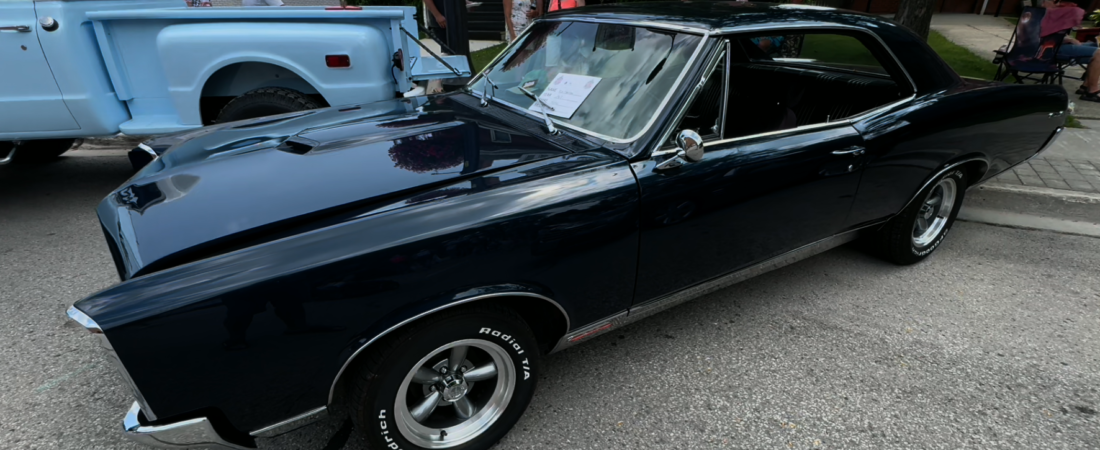
Among the many vintage beauties on display in Wallaceburg, certain cars naturally attract large crowds, standing out as icons of their times. A prime example is a stunning, dark blue Pontiac GTO. This car is a legend, often regarded by automotive historians as the one that officially launched the American muscle car era. Looking at this specific model, with its deep, mirror-like paint reflecting the summer sky and the amazed faces of onlookers, it’s easy to see why these cars are so cherished. The bold yet elegant lines of the body, the classic rally wheels wrapped in meaty BFGoodrich Radial T/A tires, and the proud “GTO” badge on the rear quarter panel all scream power, prestige, and attitude.
The interior of this GTO is just as impressive, showcasing vintage automotive design. It features pristine black vinyl bucket seats, a classic wood-grain center console, and an unmistakable minimalist dashboard focused on driver engagement rather than modern digital distractions. Standing alongside this car and looking through the open windows, you can almost hear the roar of the massive engine—a sound that resonates through your chest and recalls a time when fuel efficiency took a backseat to raw horsepower. The Pontiac GTO embodies a peak moment in American automotive culture, representing youthful rebellion, straight-line speed, and uncompromising style. Seeing one in such immaculate condition is a rare treat, making it a powerful centerpiece at any classic car show.
One of the most memorable moments of the Wallaceburg Classic Car Show comes from a passing spectator admiring the dark blue GTO. He casually remarked, “It’s incredible that when we owned these things, we couldn’t wait to get rid of them at 22 or 23. Now we pay a fortune to get them back.” This simple observation captures the irony of classic car culture and the powerful pull of nostalgia. Decades ago, these magnificent machines were everyday drivers—cars young people took to drive-in movies, commuted in, learned to park in, and traded in for something larger and more practical as they started families.
At that time, a late 1960s or early 1970s muscle car was just another used car. The youth couldn’t wait to upgrade to the next best thing, discarding what are now highly sought-after collector’s items. Today, the situation has flipped. Those same individuals, now older and fueled by a desire to reconnect with their past, are spending tens—or even hundreds—of thousands of dollars to reclaim a piece of their youth. They are buying back memories of their twenties, paying a premium to sit behind the wheel of a car that reminds them of a time when the future felt full of endless possibilities. This emotional connection drives the classic car market. It’s not just about the metal, glass, and engine; it’s about reclaiming a tangible piece of one’s personal history. These cars act as functional time capsules, allowing their owners to revisit a cherished chapter of life they thought was closed forever.
To truly appreciate the vehicles at the Wallaceburg Classic Car Show, one must also recognize the monumental effort that goes into their restoration and preservation. Cars like the pristine blue GTO don’t simply stay in excellent condition for five decades by accident. They require thousands of hours of dedicated work, immense patience, and significant financial investment. Automotive restoration is not just a weekend hobby; it’s a dedicated craft, an art form, and a true labor of love. It often starts with a rusty, neglected shell of a car, found abandoned in a barn or sinking into a field, forgotten by time.
From that starting point, the vehicle is carefully stripped down to its bare frame. Every bolt, wire, clip, and piece of trim is cataloged, cleaned, repaired, or replaced. Sourcing original new-old-stock (NOS) parts can be a global scavenger hunt that takes years, involving countless swaps, late-night forum browsing, and calls to specialized vintage dealers. The bodywork alone is a monumental task, requiring skilled hands to smooth out decades of dents and rust before applying layers of primer, base coat, and clear coat for a flawless finish. Mechanical components must be rebuilt to original factory specifications to ensure the car runs perfectly when the key is turned. When you see a classic car shining in the afternoon sun at a show, you’re looking at the result of someone’s unwavering dedication. It’s a physical representation of passion, a testament to the lengths people will go to preserve automotive history for future generations.
So, why do events like the Wallaceburg Classic Car Show continue to attract such enthusiastic crowds year after year? Why does the golden era of automobiles hold such a strong hold on our imagination? The answer lies in the timeless appeal of mechanical engineering and the unifying power of storytelling. Classic cars stand in stark contrast to modern vehicles. Today’s cars, while undeniably safe and fuel-efficient, often lack the unique personality, quirks, and soul of their vintage counterparts. Modern cars are largely defined by strict safety regulations and technology, resulting in designs that blend together in a parking lot.
In contrast, the cars of the 50s, 60s, and 70s were crafted by artists with flair. They featured sweeping tailfins, bright chrome trim, bold colors, and aggressive styles. They were heavy mechanical beasts that required the driver’s full engagement—feeling the road beneath them.
Author & Creator: Alf Blop
YouTube Channel: Alf Blop
Copyright: © All Rights Reserved by Alf Blop. Unauthorized reproduction or redistribution of this content without explicit written permission is strictly prohibited.