
In the world of classic cars, custom street rods, and vintage hot rod culture, few vehicles attract attention like a beautifully restored and customized pre-war coupe. A featured walkaround video (https://youtu.be/2XJC1N-Jjlo) offers viewers a close look at a true showstopper: a 1931 Pontiac 5-Window Coupe, custom-built and carefully maintained by owner Barry Raymond.
With its eye-catching metallic candy green paint job, this 1931 Pontiac stands proudly at a sunny outdoor car meet. It represents the golden age of American hot rodding. By blending 1930s vintage elegance with modern performance features, custom interior craftsmanship, and undeniable hot rod attitude, this vehicle exemplifies automotive restoration and customization.
Below, we explore this impressive build in detail, looking at its exterior design, engine bay, custom interior, historical context, and why vehicles like this continue to fascinate car enthusiasts globally.
- First Impressions: A Mesmerizing Metallic Green Finish
When the camera pans across the front end of this classic coupe [00:01], the vibrant metallic green paint immediately stands out. This color is far from standard; it has a deep, lustrous metallic flake that captures sunlight from every angle. The paint highlights every curve, line, and sculpted fender of the iconic 1931 Pontiac body.
In the custom hot rod world, color choice can significantly influence a build. This bold, brilliant shade of green gives the vehicle a unique character. It dramatically contrasts with the yellow awnings and blue storefronts around it.
Key visual highlights of the exterior finish include:
- High-Gloss Clearcoat: Polished to mirror-like perfection along the hood and side door panels [00:10].
- Sweeping Vintage Fenders: Full, pronounced front and rear fenders that hug wide performance tires [00:05].
- Running Boards: Traditional side running boards linking the front and rear wheel arches, preserving the classic 1930s silhouette while providing a clean structural flow [00:09].
- Vehicle Specification Card & Ownership History
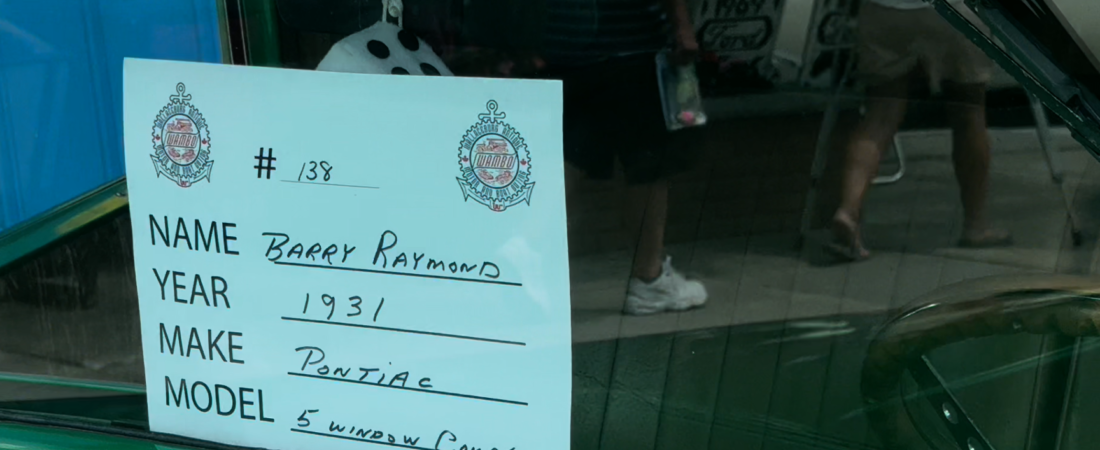
An official event display sign [00:13] positioned on the windshield details the background of this remarkable automobile:
- Entry Number: #138
- Owner Name: Barry Raymond
- Year: 1931
- Make: Pontiac
- Model: 5-Window Coupe
While Ford Model As and Deuce Coupes dominate the traditional hot rodding scene, choosing a 1931 Pontiac gives this build a distinctive edge. Pontiacs from this era boast unique styling, strong frames, and longer hoods, making them ideal for high-end hot rod projects.
- Front-End Styling and Exposed V8 Engine Bay
As the showcase zooms in on the front assembly, the craftsmanship becomes even clearer. The owner features a classic open-engine layout by removing the side hood panels [00:03] to reveal the high-performance V8 engine nestled within the frame.
The Front Grille & Nose Cone
The car’s nose has a customized vertical split grille surround [00:02] painted in matching metallic green with chrome mesh inserts. Positioned low between the frame horns and front fenders, this distinctive front-end design pays tribute to 1930s styling while suggesting aggressive street machine capabilities.
The Engine
Exposing the engine is a timeless hot rod tradition. In the engine bay [00:04], you can see a clean, detailed American V8 powerplant featuring:
- Chrome valve covers that reflect sunlight.
- A high-flow air cleaner assembly.
- Polished alternator, chrome brackets, and braided fluid lines.
- Custom headers leading to a dual exhaust system.
This mix of polished chrome, raw engine steel, and bright green bodywork delivers the classic hot rod look that builders aim for.
- Custom Interior Craftsmanship: Vintage Elegance Meets Street Rod Comfort
Moving to the driver’s side door [00:23], the video provides a detailed view of the cabin. Building a top-notch hot rod requires careful attention to the interior, and Barry Raymond’s 1931 Coupe shines in this area.
Tan Leather & Diamond-Stitched Trim
The interior features entirely custom, full tan leather upholstery [00:25]. The seats use warm saddle-tan leather with vertical pleating, offering both support and classic comfort. The inner door panels [00:28] are also lined with matching tan leather that features diamond-quilted stitching along with classic chrome window cranks and door handles.
Dashboard & Custom Instrumentation
The dashboard is custom-made and color-matched to the same metallic green gloss as the exterior [00:32]. Across the wide dash panel, there’s a full set of aftermarket performance gauges [00:36]:
- Engine Monitoring Gauges: Oil pressure, water temperature, voltage, and fuel level gauges placed horizontally across a sleek black engine-turned bezel.
- Classic Accessories: A classic pair of white plush dice with black dots [00:40] hang from the rear-view mirror, a timeless symbol of 1950s and 60s hot rod culture.
- Steering Assembly: A retro polished three-spoke wood-rimmed steering wheel mounted on a tilt steering column [00:30] ensures driving comfort without losing vintage style.
- Side Profile, Roofline, and Rear Stance
Stepping back to view the body profile [00:46], the proportions of the 5-window coupe design become clear. The term “5-Window” refers to the glass arrangement: two door windows, two rear quarter windows, and one main rear windshield.
Key Design Highlights:
- Chopped/Slightly Sunken Roofline: The visor over the windshield [00:11] casts a low, aggressive shadow on the front glass.
- Custom Rear Fender Flare: The rear quarter panels smoothly taper into wide rear fenders that fit oversized tires.
- Chrome & Polish: Chrome side-view mirrors, door hinges, and windshield wiper arms stand out against the deep green paint.
- Rear End & Exhaust Layout
The video finishes with a sweeping view of the rear end [00:49]. The rear profile of a 30s coupe is iconic, featuring a smooth, sloping trunk lid (or rumble seat lid) and custom light fixtures.
Rear Highlights:
- Embedded Custom Tail Lights: Vertical LED tail lights set flush into the rear fender edges [00:51].
- Polished Chrome Bumper Bars: Dual rear bumperettes with a wide center cutout for the license plate [00:53].
- Dual Exhaust Outlets: Twin chrome exhaust tips extending under the rear apron promise a deep rumbling sound from the V8 engine.
- Rear Stance: The car features polished aluminum wheels wrapped in BFGoodrich Radial T/A tires [00:50], giving it a classic rake—lower in the front and higher in the rear.
Why the 1931 Pontiac 5-Window Coupe Remains a Legend
In the late 1920s and early 1930s, General Motors positioned Pontiac as a stylish yet accessible brand to Oakland. Pontiacs were built with strong steel frames, smooth engines, and unique body designs created by Fisher Body.
After World War II, hot rodders mostly chose Fords for their conversions. Consequently, surviving Pontiac hot rods from 1931 are much rarer today. Seeing one built to this high standard of finish, mechanical detail, and interior comfort is a special experience at any car show.
Final Thoughts: A Work of Automotive Art
Barry Raymond’s metallic green 1931 Pontiac 5-Window Coupe (https://youtu.be/2XJC1N-Jjlo) is an outstanding example of modern street rod craftsmanship. Its flawless paint finish, roaring open V8 engine, handcrafted tan leather interior, and timeless hot rod stance reflect immense passion, dedication, and skill.
Whether you are a classic car collector, an aspiring hot rod builder, or an admirer of automotive beauty, this showcase serves as a powerful reminder of why vintage American cars will always hold their appeal.
Author & Creator: Alf Blop
YouTube Channel: Alf Blop
Copyright: © All Rights Reserved by Alf Blop. Unauthorized reproduction or redistribution of this content without explicit written permission is strictly prohibited.