
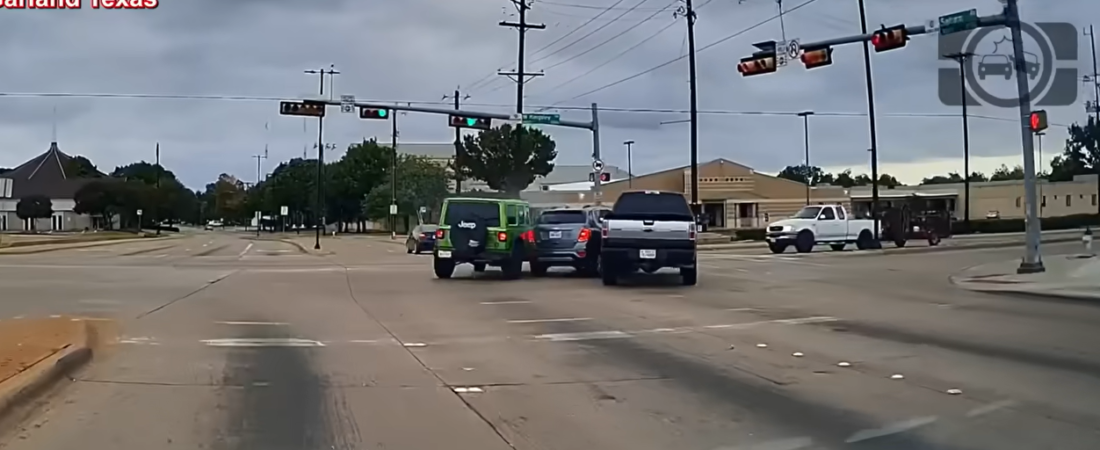
For any driver travelling across North America—from the crowded multilane highways near Toronto to the more peaceful rural areas of western Canada—there are particular difficulties to overcome. Road conditions can alter in an instant. Whether it’s sudden changes in the weather, unpredictable traffic movement, unexpected encounters with wildlife, or simply the carelessness of other drivers, safety demands that drivers remain constantly aware, watchful, and prepared.
Studying driving accidents as recorded by dashcams gives important insights into the ways in which they occur and, more importantly, into the ways in which they can be prevented. This thorough guide examines vital driving rules, defensive driving techniques, and the main road safety principles that all drivers in Canada and North America should put into practice every day.
- The reason why dashcams have become an essential car accessory
In recent years, dashcams have changed from being a specialist tech item to becoming a standard accessory in millions of cars owned by drivers. There are a number of clear advantages to fitting a good dashcam:
When assessing who was at fault after a collision, the process can be quite complex. Clear footage from a dashcam gives direct and unbiased evidence of what happened, which in turn speeds up the claims process and helps to avoid fraudulent claims.
When your vehicle is hit while it is parked or in the case of a hit-and-run, the use of high-definition camera footage raises the chances of identifying the person responsible.
By looking at the footage that has been recorded, drivers can analyze their own driving behavior, identify near misses, and improve their defensive driving skills over time.
- Learn how to practice defensive driving.
The idea of defensive driving isn’t merely one taught in driving schools; it is a way of thinking which actively safeguards you against the mistakes made by other road users.
A. Keep a suitable distance behind the vehicle
Tailgating is still one of the main causes of rear-end collisions on highways in North America. When driving under normal, dry conditions, drivers must keep a gap of at least three to four seconds behind the vehicle in front. If driving in heavy rain, snow, fog, or on icy roads, this gap should be doubled to six to eight seconds.
B. Look ahead and anticipate hazards
Most drivers concentrate only on the vehicle immediately in front of them. In order to drive defensively you should look 12 to 15 seconds ahead along the road and watch for brake lights coming on one after another, for cars moving between lanes, for pedestrians approaching crosswalks, or for vehicles making unsafe merges.
C. Always have an escape route
When driving—particularly in situations involving multiple lanes—make sure to leave space around your car on at least one side. In the event that the vehicle in front of you suddenly applies its brakes or moves into your lane, there will be room for you to move safely if there is an empty shoulder or an empty lane next to your vehicle, thus avoiding a collision that spreads through a chain reaction.
- Getting Through High-Risk Driving Environments
The hazards found in various driving situations call for particular changes in technique and concentration.
A. The roads in rural areas and gravel tracks
Because of the lower volume of traffic rural driving can give a false sense of security, there are, nevertheless, particular risks associated with rural roads.
Driving at high speeds on narrow roads without a shoulder or on unpaved roads leaves no room for error.
On loose surfaces it is easy to lose control: gravel and dirt greatly decrease the traction of the tyres, and if you brake suddenly or make sharp steering movements on loose gravel the vehicle can skid, fishtail or roll over.
In rural parts of Canada there are frequent instances of animals being involved in collisions, especially around dawn and dusk. When it’s appropriate, always use your high beams and be on the lookout for eye reflections close to the roadside.
B. Merging on the highway and changing lanes
Highway traffic can remain safe thanks to smooth merging. Among the important merging guidelines are:
The entrance ramp is intended to be used for speeding up; if you try to join a rapidly moving highway by doing so at a slow speed, you will be forced to make sudden brakes, which creates serious hazards behind you.
Check your blind spots early and look in the mirrors: mirrors never show the full situation. Before changing your position in the lane, always do a quick check of your shoulder.
- Preparing for the weather and driving according to the season
Because of the harsh winter conditions and extreme weather patterns, special vehicle maintenance and changed driving habits are needed.
It is essential to have winter tires since all-season tires start to lose their elasticity and traction when the temperature falls below 7°C (45°F); winter tires are equipped with special rubber compositions and tread designs which are intended for use on snow, slush, and black ice.
To allow for hydroplaning: when it is raining heavily, water will pool up on the asphalt. If your steering suddenly becomes light or unresponsive while it is raining heavily, gradually release the accelerator—do not hit the brakes—and keep the steering wheel in a straight position until your tyres get back on track.
Driving your car with snow or ice on your windscreen, on your roof, or on your headlights is a serious danger to both yourself and to the drivers coming behind you, since snow blowing off your vehicle can blind the cars behind it and ice sheets breaking off the roof can crack the windshields.
- Dealing with road aggression and distracted driving
Modern driver distraction and road rage are among the main causes of preventable motor vehicle collisions at present.
There’s a good reason why distracted driving laws in North America include substantial fines and the awarding of demerit points—the fact that if you take your eyes off the road for just two seconds your chance of being involved in a crash doubles.
How to de-escalate a situation involving road rage: When you come across a driver who is aggressive or hostile, don’t respond to them. Stay away from making eye contact, don’t use aggressive hand signals, and don’t obstruct them so that they can pass. If an aggressive driver is tailing you, don’t drive home instead head straight for the nearest police station or a well-lit public area while at the same time getting in touch with emergency services.
Conclusion
Road safety is something that all drivers have a shared responsibility for. If you take steps to develop good defensive driving practices, remain concentrated while driving, keep your car in good condition, and use devices such as dashcams as a means of extra security, you will greatly lower your chances of being involved in an accident and make the roads safer for everybody.
REFERENCES:
Video: INSANE CAR CRASHES COMPILATION || Best of USA & Canada Accidents – PART 53
Source: Dashcam Lessons, (published on: June 07, 2026)
Summary: This video features a compilation of real-life dashcam recordings from roads and highways across North America, showcasing sudden accidents, dangerous driving maneuvers, unpredictable road hazards, and close calls to emphasize the vital importance of defensive driving and road awareness.