
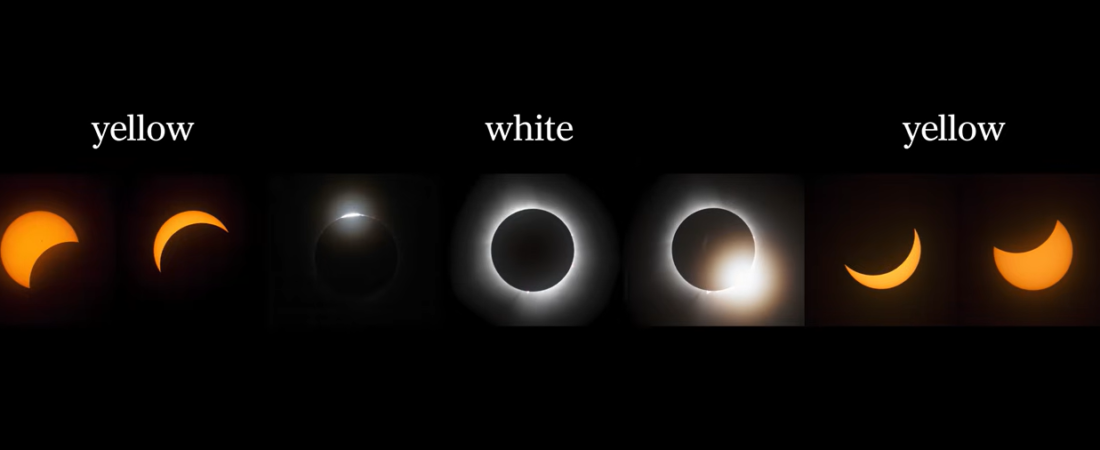
A total solar eclipse is frequently portrayed as one of the most stunning, humbling, and awe-inspiring natural events that take place on Earth. For a short while, the day changes to twilight, the temperature drops quickly, and the solar atmosphere can be seen without the need for a telescope. While millions people on the ground use protective eyewear to witness the moment, gaining an understanding of the complex orbital mechanics, atmospheric irregularities, and optical peculiarities that cause eclipses presents a fascinating scientific story. From high-altitude weather balloon missions launched near Burgos in Spain to NASA’s jet pursuit operations, observing an eclipse from the stratosphere brings to light secrets about our solar system that have fascinated astronomers for many generations.
- The Asymmetry of Totality: The Northern Hemisphere versus the Southern Hemisphere
When examining celestial maps covering thousands of years, a surprising trend appears: the Northern Hemisphere has about 15% more total solar eclipses than the Southern Hemisphere. Since orbital mechanics control the movements of the Earth, the Moon, and the Sun, why does one part of the planet receive a advantage?
The Dynamics of Elliptical Orbits
The main explanation is due to the geometry of the orbits of both the Earth and the Moon. Neither the Earth’s orbit around the Sun nor the Moon’s orbit around the Earth is a perfect circle; both are ellipses.
Variation in the Moon’s Distance: As the Moon moves around the Earth each month, its distance from Earth changes. When it is closest to Earth (at perigee), it appears up to 30% larger in area than when it is farthest away (at apogee). In order for a total solar eclipse to occur, the Moon must appear larger in the sky than the Sun so that it can completely cover the solar disk.
Earth’s Perihelion and Aphelion: Earth is at perihelion (its nearest point to the Sun) in early January and at aphelion (its farthest point from the Sun) in early July. Since the Sun appears about 7% smaller in apparent area in July, it is much easier for the Moon to fully cover the solar disk during the months around mid-year.
Seasonal Tilts and Axial Precession
Since July falls during the summer season in the Northern Hemisphere, the northern part of the Earth is tilted towards the Sun when the solar disk appears smallest. As a result, the Northern Hemisphere has a greater statistical chance of being within the centre of the Moon’s shadow (the umbra), leading to total solar eclipses.
On the other hand, during the Southern Hemisphere’s summer in January, Earth is closest to the Sun. The Sun then appears larger, making it more difficult for the Moon to completely cover it. This means that the Southern Hemisphere receives a greater share of annular solar eclipses—those in which a bright “ring of fire” is visible around the Moon’s outline.
This global imbalance is not permanent. The Earth undergoes axial precession—a slow wobbling motion similar to that of a top—and orbital precession over a period of approximately 26,000 years. In about 9,500 years’ time, the situation will reverse and the Southern Hemisphere will have the majority of total eclipses.
- The Frequency of Eclipses: Why We Have At Least Two Each Year
A widespread misconception is that solar eclipses are extremely rare occurrences that happen only once in a person’s lifetime. On a global scale, solar eclipses occur every year without fail.
+———————————————————————–+
| ECLIPSE SEASONS |
| |
| Node Crossing 1 (~34 Days) Node Crossing 2 (~34 Days) |
| [========================] [========================] |
| | | |
| At least 1 Solar At least 1 Solar |
| Eclipse Occurs Eclipse Occurs |
| |
| *Minimum per calendar year: 2 Solar Eclipses |
| *Maximum per calendar year: 5 Solar Eclipses |
+———————————————————————–+
The significance of the orbital nodes
The Moon’s orbit around Earth is inclined by about 5 degrees with respect to the ecliptic plane (the plane of Earth’s movement around the Sun). Generally, the Moon passes either above or below the straight line that connects Earth and the Sun, which means that a lunar eclipse does not occur each month. The Moon’s path, however, crosses the ecliptic plane at two places called the nodes. Twice each year, as Earth orbits the Sun, the nodes align with the Sun and this results in periods referred to as eclipse seasons. An eclipse season lasts for about 34 days. The lunar phase cycle (the synodic month), from one New Moon to the next, is approximately 29.5 days. Since this 29.5-day cycle is shorter than the 34-day length of an eclipse season, a New Moon is mathematically certain to take place at least once when the nodes are aligned. It therefore follows that Earth has at least two solar eclipses each calendar year. In rare cases, when an eclipse season starts on January 1st and the nodes’ drift matches perfectly throughout the year, Earth may have as many as five solar eclipses in one calendar year, although most of these will be partial.
The pairing of solar and lunar eclipses
Each solar eclipse is part of a paired sequence. As the line of nodes remains favourable for several weeks, Earth passes directly between the Sun and the Moon about two weeks before or after a solar eclipse. Consequently, a lunar eclipse occurs about 14 days before or after each solar eclipse.
Observation from high altitudes and chase missions
There are several difficulties involved in observing a total solar eclipse from ground level, such as unpredictable weather and a short duration of totality—typically only a few minutes at any particular location. In order to overcome these limitations, scientific teams make use of high-altitude balloons and aircraft.
| ECLIPSE OBSERVATION PLATFORMS |
+——————-+—————————————————+
| Platform | Primary Scientific Advantage |
+——————-+—————————————————+
| Ground Stations | High precision, stationary equipment setups |
| High-Altitude | Clear stratospheric view (~90,000+ ft), above |
| Weather Balloons | cloud layer and lower atmospheric scattering |
| Supersonic / Jet | Extends duration in totality by traveling |
| Aircraft | along the shadow’s trajectory path |
+——————-+—————————————————+
When major eclipses take place in Europe and North America, various research projects such as NASA’s Nationwide Eclipse Ballooning Project send specialized engineering payloads into the stratosphere. By reaching altitudes that go above 90% of the Earth’s atmosphere, wide-angle cameras are able to record the Moon’s shadow (the umbra) sweeping across the landscape at supersonic speeds. The sensors also record rapid decreases in temperature, changes in humidity, and gravity wave ripples that occur in the upper atmosphere as the Moon’s shadow quickly cools the air in its path. While people on the ground within the path of totality can only experience a period of darkness lasting a maximum of two to four minutes, specialized research aircraft can follow along the path of the shadow. By flying at high speeds in the direction that the shadow is moving, scientists manage to spend a longer time within totality and thus collect more extended spectroscopic data of the solar corona. Beyond the darkness of totality, a solar eclipse produces optical effects which can be seen on the ground. LIGHT PROJECTION THROUGH LEAF CANOPIES
Sunlight (Crescent)
\ \ \
\ \ \
v v v
+——————-+ <– Interstices between leaves act
| Leaf Canopy | as natural pinhole apertures
+——————-+
/ / /
/ / /
v v v
(((( (((( (((( (((( <– Inverted crescent light projections
cast on ground surfaces
The pinhole camera effect in nature occurs as the Moon moves over the Sun, causing the light source to change from a wide disk to a thin crescent. The small spaces between the leaves of trees, the gaps in woven fabrics, or those in artificial pinhole cards function as natural camera apertures. When light rays pass through these small openings, they invert both the horizontal and vertical images, casting hundreds of tiny crescent-shaped suns onto walls, the pavement, and the ground below.
There is a sharpening of shadows in the minutes before totality. Shadows that are aligned with the long axis of the solar crescent appear soft and blurred since the light comes from an extended line. In contrast, shadows that are at right angles to the thin strip of light become very sharp, as though they were being illuminated by a single point source of light.
Shadow bands and atmospheric turbulence: In the last 15 to 30 seconds before totality and right after, faint, shimmering bands consisting of alternating light and dark lines can be seen moving rapidly across flat and even ground surfaces. These are called shadow bands and are caused by thin beams of light that escape around the Moon’s rugged valleys (known as Bailey’s Beads) and pass through the turbulent layers of the Earth’s atmosphere. The variation in air temperature and the boundaries in density refract the narrow beams of light, resulting in a moving ripple pattern appearing on the ground.
- A summary of scientific milestones
Solar eclipses have in the past led to important scientific discoveries:
The discovery of helium in 1868: During a total solar eclipse in India, the astronomer Jules Janssen examined the spectrum of light from the solar prominences and found a yellow spectral line that matched no element known on Earth. The element was named helium after the Greek sun god Helios, even though it was not isolated on Earth until later.
The identification of highly ionized elements (between 1869 and 1939): The spectral lines observed in the solar corona during eclipses were at first attributed to a supposed element called coronium. It was only many years later, with the development of quantum mechanics, that it was found these lines actually belonged to iron atoms that had lost 13 electrons (Fe¹³⁺), thus confirming the extremely high temperatures of the solar corona.
The verification of general relativity in 1919: Sir Arthur Eddington measured the amount by which starlight bending as it passed near the edge of the Sun during totality, providing the first observational evidence for Albert Einstein’s theory of general relativity.
Total solar eclipses still provide invaluable opportunities to
REFERENCES:
Video: We sent a camera to space to film the solar eclipse
Source: Veritasium, (published on: 2026-08-17)
Summary: This comprehensive scientific exploration details the physical mechanics behind solar eclipses, addressing why the Northern Hemisphere experiences approximately 15% more total eclipses than the Southern Hemisphere due to Earth’s elliptical orbit and axial alignment during aphelion. The video breaks down the orbital mathematics showing why at least two solar eclipses occur every year, explains why every solar eclipse is paired with a lunar eclipse within two weeks, and demonstrates unique optical phenomena such as natural pinhole projections, shadow sharpening, and atmospheric shadow bands. Additionally, it highlights high-altitude research efforts-including NASA-backed balloon launches in Burgos, Spain, to capture the eclipse from the edge of space-and summarizes historical discoveries made during total eclipses, such as the initial spectral identification of helium.