
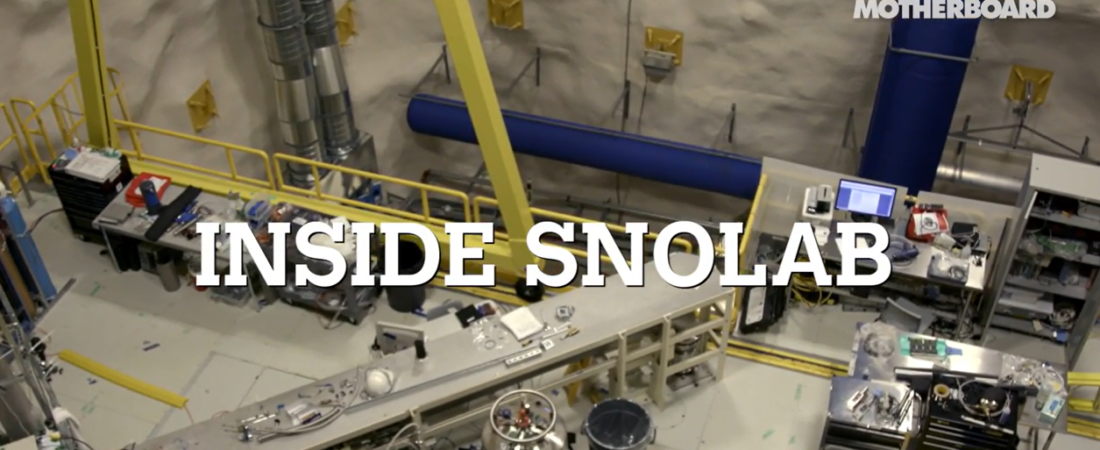
SNOLAB, which is situated two kilometres (almost two miles) under the surface in Northern Ontario, Canada, is one of the world’s deepest, cleanest and most advanced underground research laboratories. The laboratory is located in an active nickel and copper mine and functions in a setting that is intended to eliminate cosmic radiation and atmospheric noise. Scientists are able to isolate the extremely rare particle interactions they are looking for because of the two kilometres of solid rock above them, thus giving them a unique insight into the fundamental mysteries of the universe.
- A trip to the depths: from the mining cage to the cleanroom
The process of getting to SNOLAB is intense and involves several steps, illustrating the great difference between industrial mining and high-precision scientific research [00:32]. It starts early in the morning near Sudbury, Ontario, with researchers, engineers and visitors dressing in standard miner’s clothing, which includes high-visibility suits, safety boots and hard hats.
To gain access to the facility you have to travel by a mining elevator called “the cage” downwards for nearly 7,000 feet into the earth while joining the miners who are going to work [01:13].
For the underground hike, after leaving the cage people have to hike about one to two kilometres through dusty, actively mining tunnels in order to get to the lab’s entrance [01:23].
Decontamination Protocol: To protect sensitive detectors from dust, dirt, and mine residue, strict cleaning procedures are enforced [01:38]:
The equipment and supplies are washed at a specialized car-wash facility [05:08].
Before entering the laboratory area, both visitors and staff have to shower thoroughly and put on cleanroom clothing.
Blue sticky mats and shiny walls stop dust building up and leaving traces [05:20].
Cleanliness is essential in this situation, and the maintenance teams together with the cleaning staff have a vital role to play in preventing microscopic dust particles from contaminating the sensitive instruments or from jeopardising the years of data collection [04:53].
- Discovering the secrets of the cosmos: the study of neutrinos and the search for dark matter
The main aim of SNOLAB is particle physics, astrophysics and cosmology; the two major phenomena which form the basis of the research carried out there are neutrinos and dark matter.
Studying Neutrinos (The “Ghost Particles”)
Neutrinos are neutral subatomic particles which pass through ordinary matter almost entirely without obstruction. They are frequently called “ghost particles” because they interact so rarely.
The historical importance of SNOLAB lies in the fact that its predecessor, the Sudbury Neutrino Observatory (SNO), was responsible for earning the 2015 Nobel Prize in Physics through its showing that the neutrinos emitted by the Sun have mass [02:49].
In ongoing research, experiments like SNO+ make use of huge acrylic spheres that are placed in ultra-pure water together with a special type of liquid scintillator in order to detect neutrinos [01:51]. The detectors pick up signals from geo-neutrinos in the Earth’s crust as well as those neutrinos produced by nuclear reactors and by solar processes, thus providing scientists with a direct view of the reactions taking place at the cores of stars [03:02].
The Hunt for Dark Matter
Dark matter is said to account for about 27% of the total energy-matter budget of the universe [03:35]. Although it is extremely abundant, it has never been seen directly since it does not emit, absorb, or reflect light.
Experiments such as PICO look for dark matter by detecting rare collisions between hypothetical dark matter particles (for example WIMPs) and the target material [03:27].
On the surface, the bombardment by cosmic rays easily overwhelms these very subtle signals from collisions. However, underground, the layer of rock functions as a filter and creates a quiet environment in which dark matter interactions might be detected [00:11, 03:54].
- Biology in the Deep: Life Exposed to Low Levels of Background Radiation
Although particle physics is SNOLAB’s main area of focus, the facility also supports research in the fields of biology and physiology. The laboratory provides an environment which is essentially free from background radiation coming from the surface, enabling researchers to investigate how organisms respond when both terrestrial and cosmic radiation are eliminated.
In the context of the REPAIR Project, scientists have studied the growth of organisms, for example that of embryonic whitefish eggs, under conditions of sub-background radiation [05:44, 06:03]. Their aim is to find out if normal surface radiation functions as a necessary biological stimulus for development and repair mechanisms [06:24].
The effects of atmospheric pressure on humans and animals have been investigated by researchers using fruit flies (Drosophila) to examine the behavioural responses, motor recovery, and cognitive fatigue resulting from ambient pressure at great depths underground [06:52, 07:15]. The data obtained from these studies are valuable in showing how prolonged exposure to high-pressure environments influences living organisms.
- The difficulties involved in operations and the strict procedures
Operating a multi-million-dollar laboratory deep inside an active mine comes with unique working conditions [04:29]:
Wireless signals are not allowed because there would be a risk of unintentionally interfering with our mining activities or with the triggers of sensitive experiments [04:36].
Opening an unauthorized door or disrupting a clean area could disturb the delicate thermal balances or introduce contaminants and thus possibly spoil the long-term measurements [04:43].
Being subjected to high atmospheric pressure together with a strong focus can cause physiological fatigue and therefore it is necessary to carefully manage the shift rosters and take appropriate safety measures [08:12].
Summary of Key Highlights
Near Sudbury in Ontario, Canada, at a location about 2 km (approximately 6,800 feet) underground [00:32, 01:23].
The main objectives are to detect neutrinos, to search for dark matter, and to investigate the biological effects of low-background radiation [00:47, 03:22, 05:44].
The major experiments mentioned are SNO+ (concerned with neutrino research) and PICO (concerned with dark matter research) [02:05, 03:27].
The environment is an ultra-clean laboratory area that is incorporated within an actively operating nickel and copper mine [01:23, 01:35].
Video Title: SNOLAB: Inside the Dark Matter Lab Buried Over a Mile Underground
Channel Name: Motherboard
Published Date: February 1, 2017
Video Length: 8 minutes, 56 seconds
Direct Link: https://www.youtube.com/watch?v=kCpVMc1PdhM
Summary:
The video, which has a documentary format, takes the audience 2 kilometres (almost 7,000 feet) underground to SNOLAB, a science facility that is at the forefront of scientific research and is situated in an active nickel and copper mine in Sudbury, Ontario, Canada. It shows journalists travelling down in a mining elevator (referred to as ‘the cage’), walking through the dirty mine tunnels, and going through strict cleaning procedures in order to gain access to one of the cleanest laboratory areas in the world.
The video looks at major research projects based at the facility, such as the SNO+ experiment (which involves the study of neutrinos, or “ghost particles”) and the PICO experiment (designed for the search of dark matter). It also features biological research, for example the REPAIR project (which looks at how organisms develop when they are protected from natural background radiation) and experiments with fruit flies regarding the physiological effects of working at high atmospheric pressure.