
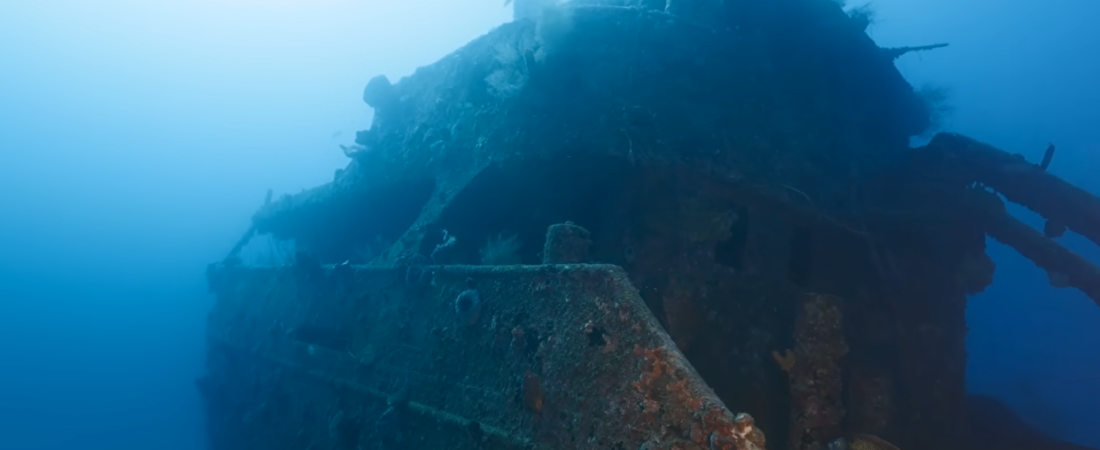
Introduction: The Legend That Captivated the World
For almost 100 years, no geographical expression has caused so much mystery, terror, and fascination as the Bermuda Triangle. Well known also as the “Devil’s Triangle”, this informal area of the North Atlantic Ocean—approximately enclosed by Miami, Bermuda, and San Juan in Puerto Rico—has been blamed for having swallowed dozens of aircraft, hundreds of ships, and thousands of human lives without leaving any trace.
The idea of extraterrestrial abductions, secret underwater portals, technology lost by the mythical civilization of Atlantis, and magnetic anomalies that can make navigation tools useless has been promoted by popular culture, conspiracy theorists, and best-selling books. Yet, what is the truth behind all this sensationalism? What actually takes place in this notorious oceanic area when modern oceanographers, marine data analysts, and aviation experts examine the records over the centuries?
The Anatomy of an Unmapped Anomaly
A most surprising fact regarding the Bermuda Triangle is that it has no official status; it is not acknowledged by the U.S. Board on Geographic Names and is not found in any official world atlas or government map.
Since there are no official boundaries, the estimated size of the area ranges from 500,000 to 1,500,000 square miles. The boundaries are altered, distorted, or extended by different historians or by sensationalist authors in such a way as to include any disappearance that suits the story. This constantly changing definition of the region presents an immediate problem for analysis: if the borders of a region can be continually modified, almost any maritime accident in that region can be attributed to its ‘curse’.
Historical Origins: From Columbus to Shakespeare
The strange reputation associated with this section of the sea goes back more than five centuries to Christopher Columbus’s first journey to the New World in 1492. While sailing through the Sargasso Sea, Columbus noted that his compass gave odd readings with the needle behaving in an unusual way when going from night to morning. He also observed rough sea swells and mentioned a flickering light on the horizon which looked like a candle flame rising.
A hundred years later, in 1609, the English supply ship destined for the Jamestown colony—the Sea Venture—was wrecked near Bermuda when it hit a severe storm. The dramatic account of the crew who had been left marooned on the shores of Bermuda became widely popular in England and is generally thought to have inspired William Shakespeare’s play The Tempest, the text of which specifically mentions the “vexed Bermoothes.”
The Birth of a Modern Myth: Ghost Ships and Missing Bombers
The area’s reputation for storms was first set down in early stories, but it was the events of the 20th century that caused the Bermuda Triangle to become part of world folklore.
The Fate of the USS Cyclops (1918)
The USS Cyclops, a huge 542-foot American Navy collier carrying more than 300 crew members and 10,000 tons of manganese ore, disappeared while en route from Brazil to Baltimore after having made an unplanned stop in Barbados; no distress signal was received and no wreckage or debris has ever been found, so the ship is still the largest loss of life in the history of the U.S. Navy that was not the result of combat.
The Mystery of Flight 19 (1945)
In December 1945 a routine training flight was carried out from Fort Lauderdale, Florida, by five U.S. Navy TBM Avenger torpedo bombers, the crews consisting of 14 airmen. The flight leader, Lieutenant Charles Taylor, said that his compasses were not working properly and that he became seriously disoriented over the water; believing himself to be over the Florida Keys he flew eastwards into further parts of the Atlantic Ocean. His radio transmissions eventually disappeared and all five aircraft ultimately ran out of fuel before having to ditch in rough seas. Moreover, a PBM Mariner flying boat which had been sent on a search-and-rescue mission also disappeared, 13 of its crew members being on board.
The Coining of the Phrase
In 1964 Vincent Gaddis wrote an article for a pulp magazine called “The Deadly Bermuda Triangle”, thereby giving a formal link to all these separate disappearances. Ten years later, in 1974, Charles Berlitz came out with The Bermuda Triangle, a book that became an international bestseller and sold more than 20 million copies. By doing so, Berlitz promoted the idea that the disappearances were connected with Atlantis, time warps, and alien abductions, and thus established the legend in mainsteam culture.
Scientific Hypotheses: Weather, Physics, and Geology
Before drawing supernatural conclusions, scientists and researchers have put forward a number of natural, earth-science-related explanations for the real accidents in the area.
- The agonic line and compass variation
A common scientific explanation is based on magnetic declination, which is the angle between true north and magnetic north. For a long time the “Agonic Line” (a hypothetical line along which true north and magnetic north coincide with no difference) went through certain areas of the Atlantic close to Bermuda. When navigators did not allow for this variation, they could end up miles off course. However, the Earth’s magnetic field is dynamic; the Agonic Line has now moved westward into the Gulf of Mexico, although the stories about Bermuda continue to circulate. - The Gulf Stream and Rogue Waves
The Gulf Stream is similar to a huge and fast-flowing river in the ocean, with speeds that go beyond four or five knots every hour—that is 300 times faster than the Amazon River. It is able to transport ship debris or aircraft that have crashed hundreds of miles from the place where the accident occurred, which is the reason why search parties usually fail to locate any wreckage. Moreover, the meeting of powerful currents and severe Atlantic storms results in conditions that are perfect for rogue waves—unexpected, enormous walls of water reaching heights of up to 100 feet and capable of destroying large ships in a matter of seconds. - Methane Hydrate Eruptions
A different theory involves huge amounts of methane gas being trapped in a hydrate form within the ocean sediments under the sea floor. When such pockets break apart, enormous bubbles of gas rise to the surface, lowering the density of the water and in theory causing ships to sink suddenly and without warning. Although methane craters have been discovered in the arctic waters, there is almost no geological evidence of recent catastrophic methane eruptions in the Bermuda area.
What the Cold, Hard Data Reveals
Although natural factors such as hurricanes, rogue waves, and strong currents make the North Atlantic a difficult area, contemporary statistical evidence refutes the main idea of the Bermuda Triangle legend.
When researchers look at the global records on maritime safety—such as those kept by Lloyd’s Register of Shipping, the U.S. Coast Guard, and the National Transportation Safety Board (NTSB)—they arrive at a surprising conclusion namely that the Bermuda Triangle is no more dangerous statistically than any other part of the ocean which is heavily travelled.
The proportion of accidents is low: an analysis of tens of thousands of shipping incidents around the world finds that only about 4% took place in the Bermuda area. This figure is in line with the global average when one considers the high level of traffic from commercial, cruise, and private vessels passing through Florida, the Bahamas, and the Caribbean.
The amount of shipping loss nowadays shows that safety accidents in the area have decreased greatly over the past few decades as a result of the use of advanced radar, GPS tracking, and satellite meteorology.
The cause of the incident was human error: the investigation reports concerning past aviation accidents, such as Flight 19, always attribute the event to navigational disorientation, sudden bad weather, and fuel exhaustion rather than to supernatural causes.
Conclusion: A Fabulously Unremarkable Truth
The Bermuda Triangle is still one of the greatest cultural mysteries of history, not since the water has any mysterious qualities but because humans enjoy a good story.
If you get rid of the urban legends, the historical sensationalism, and the exaggerated boundaries, what remains is a large area of ocean that is frequently used and prone to hurricanes, a place where human error and unpredictable weather sometimes come together. Statistically, sailing through the Bermuda Triangle is just as safe as navigating any other part of the world’s oceans. The mystery of the Bermuda Triangle has not been unsolved; it has merely been explained.
REFERENCES:
Video: What Scientists Are Beginning to Find in the Bermuda Triangle
Source: Astrum Earth, (published on: 2025-04-14)
Overview: The video looks at the history of the Bermuda Triangle, the various myths associated with it, and the scientific theories that have been put forward. It looks into historical records such as Columbus’s log, the disappearance of the USS Cyclops, and the case of Flight 19, and also considers explanations involving compass declination, rogue waves, the Gulf Stream, and methane hydrates. Finally, the video looks at overall global data on maritime and aviation accidents to show that, in terms of statistics, the Bermuda Triangle has no greater rate of disappearances or incidents than any other area of the world’s oceans that sees a great deal of traffic.