
The Eternal Encounter: The Unyielding Power and Glittering Beauty of the Sea Against Stone
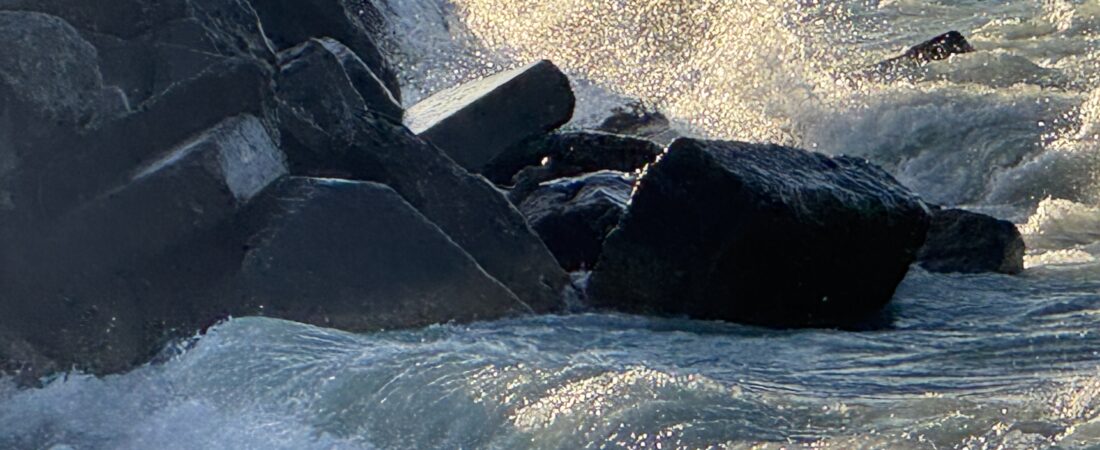
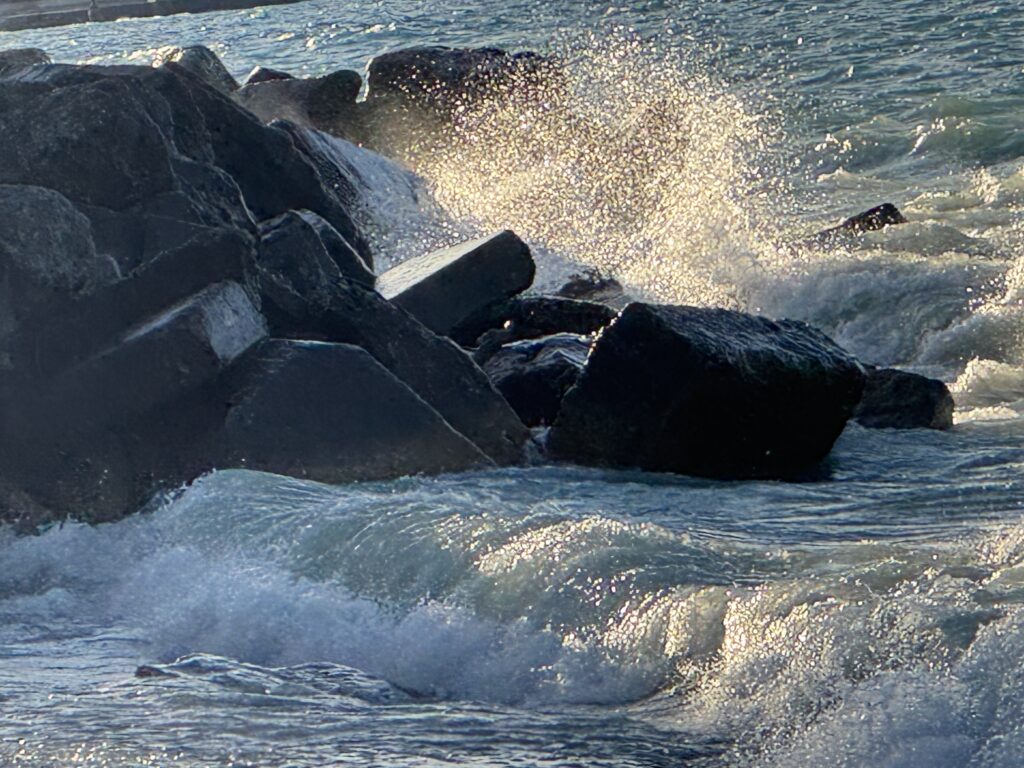
The image you see illustrates a basic truth regarding our planet: the continual, dynamic interaction between the unchanging land and the ever-restless sea. This one photograph, a frozen instant showing chaotic energy alongside peaceful beauty, provides a strong starting point for a discussion on coastal dynamics, engineering, and the deep aesthetic of natural processes. It is a scene that can be found on countless shorelines, whether along the wind-blown Atlantic coasts or the sun-drenched Mediterranean shores, wherever human efforts are made to establish a boundary that nature is always redrawing.
The most prominent feature in the foreground are huge, geometric concrete blocks, usually referred to as ‘dolos’ or ‘accropodes’, which have been designed specifically to break the force of the waves and prevent the coastline from eroding. They are dark, wet and solid, a clear indication of humanity’s efforts to control and resist the effects of the sea. Nevertheless, the true主角 of this scene is the water. A strong wave has just hit these man-made structures, causing a spectacular and explosive jet of spray. This spray, illuminated by the low angle of the sun (which is either in the early morning or late afternoon), is a magnificent natural phenomenon. The sunlight reflects off thousands of individual droplets, creating a sparkling, almost magical flow of gold and silver against the dark, wet rocks and the deep, rich blue of the open water. This is not merely a collision; it is an encounter that brings out both the strength and the transient beauty of the sea’s power.
The visually striking image is not merely a pleasant photograph; it serves as a trigger for examining the complex relationships that characterize coastal areas. In this article we will look at the important role played by these engineered breakwaters and the way in which they work to protect vulnerable shorelines. We will study the continuous and ever-more urgent struggle against rising sea levels and more severe storm events, and the innovative solutions that engineers are coming up with. Moreover, we will go beyond the engineering aspect and consider the artistic viewpoint as well as the deep sense of wonder that scenes such as this evoke—a reminder of the powerful force of nature and of the delicate balance between control and acceptance. The image, with all its sparkling intensity, is a small-scale representation of a much wider, global discussion about adaptation, resilience, and the continuing appeal of the sea.
Bridging the Waters: Human Ingenuity and Marine Passages
As we continue along the shoreline, the story changes from a description of the wild, disorderly effect of breaking waves to a wider view of coastal infrastructure and civil engineering. The photograph that goes with it gives us a broad overview showing how natural waterways interact with large-scale constructed developments. In the foreground, rough, wind-blown waters ripple under a bright afternoon sky, bordered by rocky breakwaters and untamed coastal vegetation. However, in the background, a major steel arch bridge rises prominently, elegantly spanning the wide channel and linking the two distant shores.
This extensive scene illustrates the dual character of coastal management. On one hand, small, local breakwaters constantly operate close to the shore to take in the hydraulic force and stop shoreline erosion; on the other hand, huge steel and concrete structures are built up above to allow for commerce, travel, and regional connectivity. Bridges of this kind are outstanding examples of modern engineering, being designed not only to carry heavy vehicle traffic but also to endure severe environmental conditions such as strong winds, exposure to corrosive seawater, and powerful tidal currents. Below the steel trusses, the navigation channels stay open so that cargo ships, recreational boats, and local ferries can pass safely through the busy waterways.
Moreover, the image shows the careful balance that must be struck between industrial usefulness and ecological conservation. Coastal areas are dynamic transition zones that support a variety of marine life and shoreline habitats. Building such impressive bridges demands careful environmental planning in order to reduce any disturbance to aquatic ecosystems, sediment flow, and coastal bird populations. The fact that Canadian flags are visible near shoreline facilities shows how important these waterways are as key international or national transport routes, where maritime safety and environmental responsibility must be combined.
When we look at this combination of land, water, and sky, it is clear that human civilization does not simply oppose the sea—it aims to get along with it. Whether it is stone barriers that absorb the force of the waves or steel spans that extend across wide straits, each feature shows our continuous attempt to live in harmony with powerful natural forces. In the last part of our investigation, we will examine in more detail how smart monitoring technologies and sustainable design methods are influencing the future of resilient coastal infrastructure.
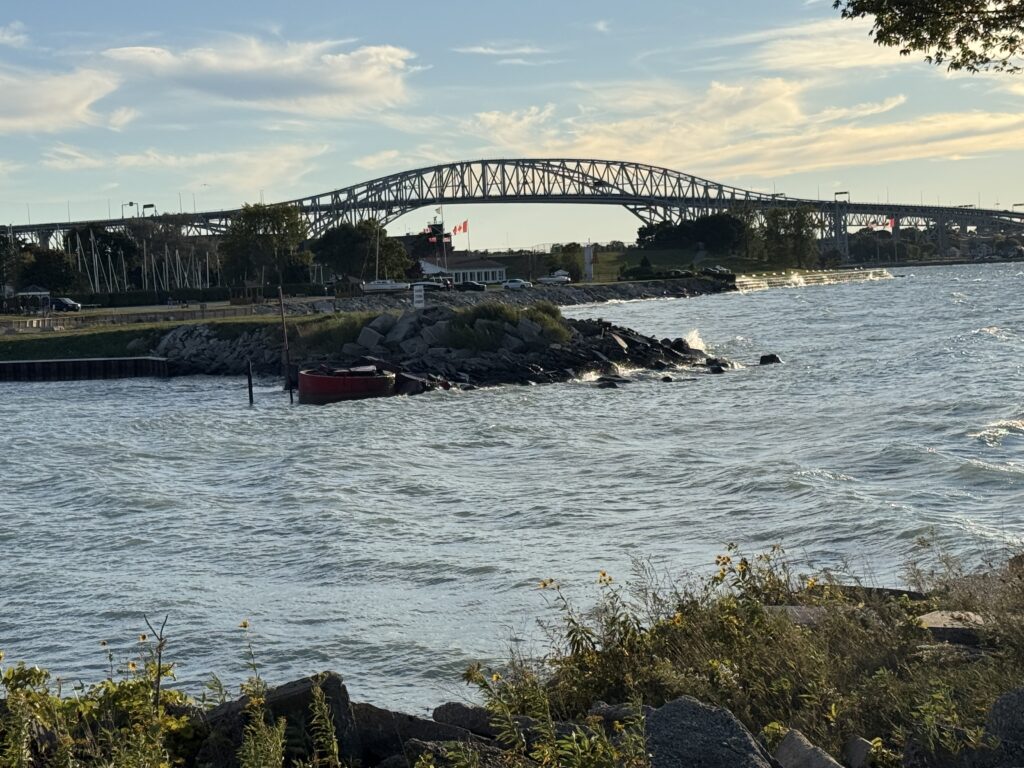
Sustainable Horizons: Pioneering a new approach to coastal resilienceWhen considering the future, it is essential to incorporate ecological factors into coastal engineering. The lively plant life seen along the shore in the foreground reminds us that coastlines are living environments, not simply fixed geographical boundaries. Nowadays, civil engineers and marine biologists are more and more working together to develop “nature-based solutions” that complement conventional concrete or steel constructions. They do this by creating artificial reefs, restoring wetland vegetation, and using bio-receptive concrete blocks which promote the settlement of marine life, so that coastal areas can build up defence systems that grow stronger and more biologically diverse over time.
Technology is also transforming the way in which we monitor and protect these important passages. Through the use of advanced sensor networks, satellite telemetry, and real-time hydrodynamic modelling, local planners are able to instantly monitor wave behaviour, structural stress, and changes in underwater currents. Early warning systems linked with automated weather stations guarantee that maritime navigation stays safe, even in the face of unexpected seasonal storms or serious climatic disturbances. This kind of intelligent infrastructure not only reduces long-term maintenance expenses but also greatly enhances public safety in busy waterways. In the end, the way in which human ambition and natural beauty are reflected in this landscape acts as a plea for careful stewardship.
To cover vast distances with impressive architectural spans while at the same time protecting sensitive shoreline ecosystems calls for ongoing innovation, a strong commitment to policy, and international cooperation. As coastal populations grow and global climate patterns change, our methods for building near the water’s edge must stay flexible, adaptive, and respectful of nature’s powerful energy.
By recognising both the strength necessary to withstand ocean forces and the wisdom needed to live in harmony with aquatic environments, society can make sure that these splendid marine views—where steel arches stretch towards the sky and clear waters flow freely beneath them—will last for generations to come. Whether one is looking at these engineering feats from a distance or walking along the rocky revetments, one cannot help but feel a deep admiration for human ingenuity and the enduring grandeur of the natural world.
Conclusion: The Endless Rhythm and Eternal Wisdom of the Sea
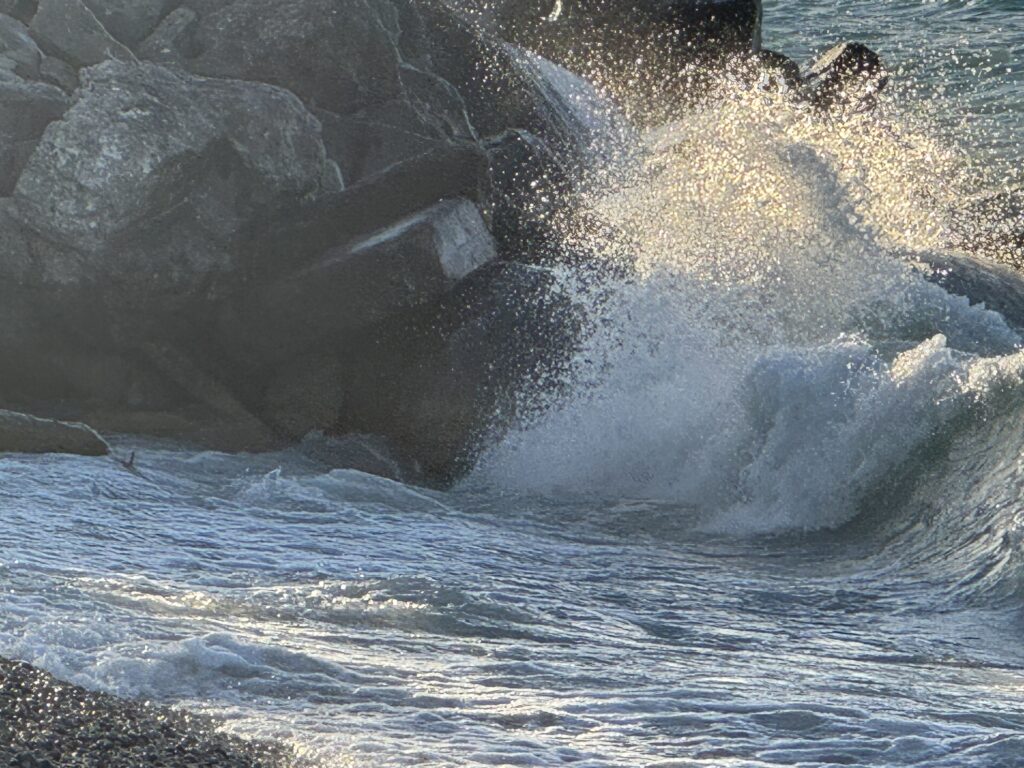
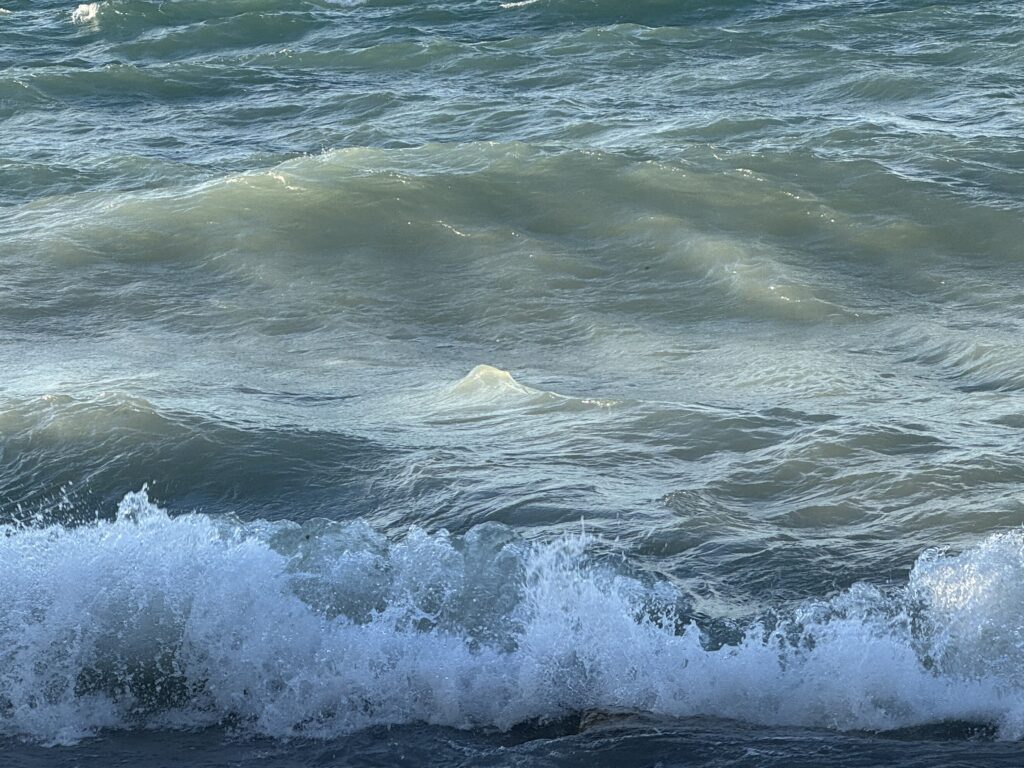
To bring our investigation to a close, we must once again turn to the pure and uncontrolled nature of the open sea. When we remove the artificial concrete breakwaters and the tall steel arch structures, this last scene puts us directly in contact with waves that are rolling and disturbed by the wind as they move across the water’s surface. The sea foam, which has been churned up, forms fine white crests that gleam in the gentle sunlight and display faint shades of emerald, gray, and deep navy blue.
This striking sight provides a poetic insight into the impermanence and constant change that characterise our natural environments. Each and every wave is a form of kinetic energy travelling over great distances, shaped by the action of atmospheric winds, gravitational forces, and the shape of the seafloor. Although people build large bridges and strong revetments in order to stabilise shorelines and link up remote communities, the fundamental, fluid movement of the ocean stays entirely unstoppable and continuously changes.
Acknowledging this powerful force leads to a different way of thinking about how society deals with coastal areas and civil engineering. Future generations need to go beyond merely relying on rigid and static defences and instead adopt dynamic and adaptive management methods. By combining flexible, nature-oriented designs with intelligent digital monitoring, we are able to protect human settlements while at the same time preserving the natural hydrodynamic processes that keep marine ecosystems healthy and lively.
In the end, being standing next to the surging water serves as a reminder of our small position within the Earth’s complex natural systems. The ocean inspires great artistic admiration, fuels international trade, and at the same time poses significant engineering challenges. By respecting the timeless rhythm of the waves, by balancing human ambition with ecological awareness, and by implementing innovative sustainable solutions, we can guarantee a harmonious coexistence with the sea—where human progress and the wild beauty of nature continue to flourish together along tomorrow’s ever-changing horizons.
Article Reference & Credits
Publisher & Media Owner: Canadian Newz (https://CanadianNewz.com)
Content Creator / Author: Canadian Newz
Photography Credits: All photographs and visual media featured in this article were captured by Canadian Newz and are protected under copyright.
Licensing & Usage: No part of this text or image content may be reproduced, republished, or redistributed without explicit written permission and proper source attribution back to Canadian Newz