
The astonishing findings regarding planet K2-18bIn centuries past, humankind has gazed up at the night sky and posed one basic question: are we the only beings in the universe? For the first time in the history of science, researchers might now have a definite answer.Data collected by NASA’s principal observatory, the James Webb Space Telescope (JWST), has shown clear indications of possible biological activity on an exoplanet situated 124 light-years away. This remote planet, known as K2-18b, has shown a potential biosignature with an estimated probability of 99.7%.Could it be that K2-18b actually hosts a flourishing extraterrestrial ecosystem, or are we instead witnessing a sophisticated form of alien chemistry that we have not yet understood?What makes planet K2-18b so remarkable?
The planet was discovered in 2015 by the Kepler Space Telescope while it was carrying out its K2 mission;
K2-18b is about 2.5 times wider and nearly nine times more massive than Earth. It orbits a cool red dwarf star (K2-18) which is located around 124 light-years away in the constellation Leo.Although it orbits its host star much closer than Mercury does the Sun, the lower temperature and reduced luminosity of the red dwarf place K2-18b right within the habitable zone—the area around a star where temperatures enable liquid water to exist on a planet’s surface.
Key physical features of K2-18b:Radius: about 2.6 times that of Earth’s radiusMass:
about 8.6 times that of Earth’s massClassification: Hycean planet (a warm, ocean-covered world with a hydrogen-rich atmosphere)Orbital distance:
2.5 times closer to its star than Mercury is to the SunEnergy received:
similar to the heat and light that Earth gets from the SunObservations made by the Hubble Space Telescope in 2019 confirmed the presence of water vapour in the planet’s atmosphere. This discovery raised K2-18b to the highest priority on the list of planets for further atmospheric study.
The chemical ‘smoking gun’:
dimethyl sulfide (DMS)When the James Webb Space Telescope directed its highly sensitive instruments towards K2-18b, it picked up spectral signatures that left astronomers around the world astounded. The JWST detected traces of dimethyl sulfide (DMS) together with carbon-containing molecules such as methane and carbon dioxide, while notably not finding ammonia.On Earth, dimethyl sulfide is a very specific compound: it is produced almost solely by living organisms, mainly by marine phytoplankton and by microbial algae that are breaking down in ocean water.
The atmospheric chemical profile of K2-18b:
├── Dimethyl Sulfide (DMS): Detected (Associated with biological life on Earth)
├── Carbon Dioxide (CO2): Abundant
├── Methane (CH4): Abundant
└── Ammonia (NH3): Undetected (Suggests absorption by a global ocean)
The significance of detecting DMS on K2-18b lies in how concentrated and unstable it is:
High Concentration: Spectral analysis indicates that the amount of DMS on K2-18b could be as much as 1,000 times greater than that found on Earth.
Short Atmospheric Lifespan:
DMS breaks down quickly when exposed to ultraviolet light and atmospheric oxidants within just a few days.
Continuous Replenishment: Since DMS disappears so rapidly, its presence in large amounts means that there must be a huge and continuous source replacing it in real time. On Earth, that source is marine life.
Understanding the 99.7% Confidence Level:
3-Sigma versus 5-Sigma
Although a 99.7% probability may seem to offer definite proof, scientific standards demand strict statistical verification before declaring the discovery of extraterrestrial life.
In physics and astronomy, statistical certainty is expressed in terms of sigmas:
Confidence Level Statistical Probability Scientific Meaning
1-Sigma ~68% An initial indication; there is a high probability that the result is due to noise or an instrument fault
3-Sigma 99.7% The present state of the K2-18b data; highly promising but still requiring verification
5-Sigma 99.9994% The gold standard for a discovery (for example, the discovery of the Higgs boson)
To achieve the desired 5-sigma level—which corresponds to only a one-in-a-million chance of a statistical error—astronomers must carry out further observations in multiple infrared light bands to make sure that the DMS signal is not simply the result of overlap with other atmospheric gases such as methane.
What Kind of Life Could Exist on a Hycean World?
If the atmospheric signatures of K2-18b really do have a biological origin, what sort of ecosystem might flourish on a world so unlike Earth?
- Deep Ocean Microbes
Since K2-18b has a thick hydrogen atmosphere and vast stores of water, the first forms of life would probably be similar to Earth’s extremophiles. Microorganisms situated near deep-sea hydrothermal vents could derive energy directly from chemical reactions (chemosynthesis) rather than from sunlight. - Large Floating Marine Organisms
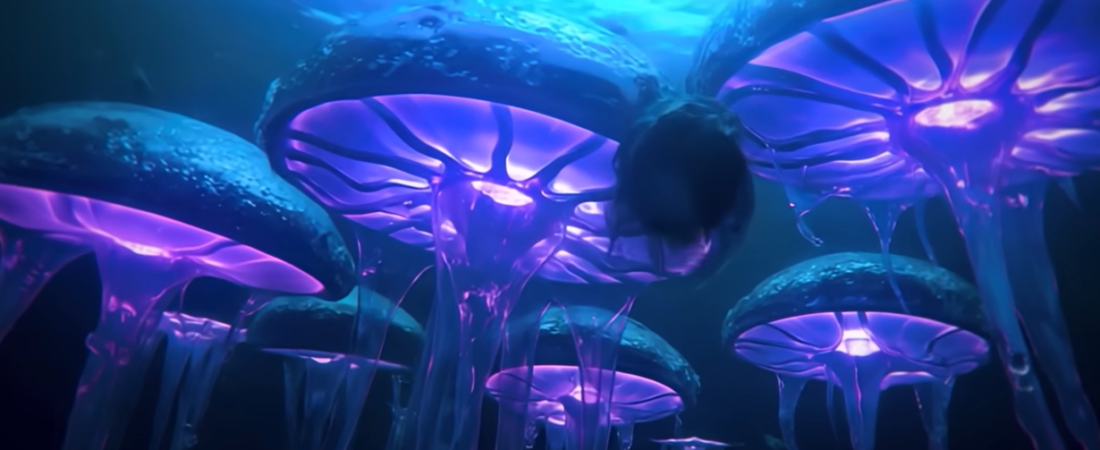
In an environment with high buoyancy and a dense aquatic medium and with lower effective light levels, more complex organisms could evolve without needing rigid internal skeletons. Massive jellyfish-like structures or solid, cartilaginous aquatic creatures could drift through the warming global oceans miles below the atmospheric layer.
Other Mind-Bending Exoplanets in Our Cosmic Neighbourhood
While K2-18b is the focus of attention, astronomers have also found several other remarkable exoplanets that broaden our understanding of planetary systems:
Teegarden b (12.5 light-years away):
An Earth-sized candidate orbiting within the habitable zone of a red dwarf. Because of tidal locking, it probably has a narrow, temperate “twilight zone” located between the areas of permanent day and night.
TOI-700 d (101 light-years away):
An Earth-sized planet that is not tidally locked and orbits a quiet star, providing a stable environment for the possible presence of liquid surface water.
WASP-76b (640 light-years away):
An extreme ultra-hot Jupiter where temperatures exceed 2,300°C, causing metals to evaporate on the day side and leading to rain of molten iron on the night side.
WASP-107b (200 light-years away):
Referred to as the “cotton candy planet”, this super-puff exoplanet has the mass of Neptune but the volume of Jupiter, giving it an extremely low density.
The Way Forward: Are We on the Brink of a New Era?
The current study of K2-18b represents a major milestone in modern science. In the coming years, further observations using the JWST’s Mid-Infrared Instrument (MIRI) and the soon-to-be-operational ground-based extremely large telescopes will provide the final data necessary to reach the 5-sigma benchmark.
Whether or not K2-18b ultimately confirms alien biology or shows that there are entirely new abiotic chemical processes at work, one thing is certain: humanity is now closer than ever to solving the greatest cosmic mystery.
REFERENCES:
Video: James Webb Just Found a Planet Better Than Earth – 99.7% Chance of Life!
Source: Destiny, (published on: 2025-05-24)
Summary: The video explores the groundbreaking discovery of potential biosignatures on the exoplanet K2-18b, located 124 light-years away. Utilizing data from the James Webb Space Telescope (JWST), scientists detected high concentrations of Dimethyl Sulfide (DMS)-a gas primarily produced by marine life on Earth-in the atmosphere of this Hycean ocean world with a 99.7% (3-sigma) confidence level. The video details the timeline of discoveries leading up to JWST’s findings, explains the statistical standards needed for confirmation (5-sigma), speculates on possible alien life forms in deep hydrogen oceans, and highlights several other bizarre exoplanets across the galaxy.