
When it comes to the history of American cars, few names stir up as much enthusiasm, nostalgia, and excitement as the Chevrolet Corvette. Since its first appearance in the 1950s as a sleek roadster with a fiberglass body, it has evolved into a high-performance, mid-engine supercar and has won the hearts of car fans for many generations.
At the recent Rev & Ride Auto Fest, car enthusiasts from all over came together to celebrate classic muscle cars, restored street rods, and vintage masterpieces. Although the exhibition site was full of amazing vehicles, one car in particular caught everyone’s attention and became the highlight of the event: a stunning, custom-painted 1978 Chevrolet Corvette C3. In this article, we’ll examine in detail the remarkable 1978 Corvette that was on display at the Rev & Ride Auto Fest, look at what makes the C3 model so iconic, analyze its special design features, and explain why classic Corvettes are still considered top investments for both enthusiasts and collectors.
The Star of the Show: A 1978 Emerald Green Chevrolet Corvette
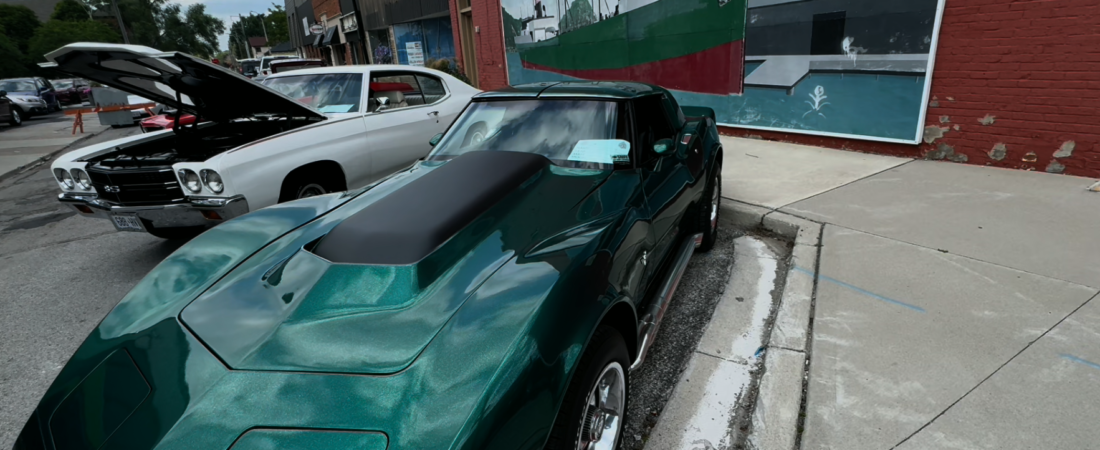
In a classic car show you’d normally see bright reds, deep blues, and bold blacks. But this particular 1978 Corvette, owned by Nick DeRriq, grabs your attention right away because of its deep, glowing metallic emerald green paint. In the bright sunlight the paint shines with rich metallic flakes, bringing out all the sharp curves and aggressive angles of the C3 body.
- Bold Exterior Style and Custom Elements
The C3 generation of Corvettes is well known for its unique “Coke bottle” shape—wide muscular fenders, a narrow waist, and a long, sweeping hood. This particular example takes those classic proportions to an even greater extent:
Aggressive Cowl Induction Hood: In the centre of the hood there is a matte black cowl induction scoop that gives the front end a threatening, track-ready appearance. Functionally speaking, cowl induction hoods are designed to draw in cooler, high-pressure air from below the windscreen and channel it into the carburetor or intake manifold, thereby improving horsepower.
Classic Side Pipe Exhausts: One of the most eye-catching features of this car is the continuous chrome side exhaust that runs along the rocker panel. Side pipes are a nostalgic reference to old road racing, giving the car a low-slung, raw muscle look and producing a deep, rumbling V8 exhaust sound that you can feel in your chest.
Classic Wheels and Tires: The car is fitted with classic rally-style chrome wheels and BFGoodrich Radial T/A tyres with white letters raised on the sidewalls. This combination of wheels and tyres is the classic American muscle car setup, combining the vintage aesthetic with solid road performance.
Aerodynamic Rear Spoiler: At the back, the sleek fastback glass roofline slopes down to an integrated rear spoiler that finishes off the car’s aggressive look and is positioned right above the distinctive round Corvette dual taillights.
Inside the Car: A Timeless Black Leather Interior
Just as impressive as the exterior of this 1978 Corvette is its interior design. When you look inside through the open window, you can see a carefully restored and well-preserved cabin:
Deep Black Leather Bucket Seats: The comfortable, ribbed black leather seats are as clean and new as they were when the car came off the production line in 1978. The high seatbacks provide good support while still offering classic comfort.
Driver-Focused Cockpit: During the C3 era, Corvette designers placed a strong emphasis on the driver’s experience. The centre console rises up towards the dashboard, positioning key dials—such as oil pressure, coolant temperature, fuel level, and the clock—directly in front of the driver.
Three-Spoke Leather Steering Wheel: In front of the driver is the traditional three-spoke leather steering wheel with the iconic crossed-flag Corvette emblem on the horn button.
Corvette Branding Details: The centre armrest and the interior trim have classic Corvette badges, showing how carefully the owner has maintained this legendary car.
Why the 1978 Corvette Has a Special Place in Automotive History
The year 1978 was a major turning point in Corvette history: it marked the 25th anniversary (the Silver Anniversary) of the Chevrolet Corvette. First introduced in 1953, the Corvette had been in continuous production for 25 years by 1978. To celebrate this occasion, Chevrolet introduced several important design changes and special editions that defined the final years of the C3 era.
Key Features of the 1978 Model Year:
The Fastback Glass Roofline: The biggest change in 1978 was the replacement of the old flat, vertical rear window with a large, sweeping fastback glass rear window. This not only gave the C3 a smoother, more modern look but also greatly increased the storage space behind the seats.
Updated Interior Dashboard: The 1978 model featured a redesigned instrument cluster and dashboard, with square gauge housings and an improved glovebox layout.
Pace Car Recognition: A 1978 Corvette was chosen as the official pace car for the 62nd Indianapolis 500 race. This helped boost the Corvette’s reputation and led to a limited edition run of the Pace Car.
Silver Anniversary Edition: To mark 25 years, Chevrolet offered a two-tone silver paint scheme, which is still one of the most recognised colour combinations for classic Corvettes today.
Performance Under the Hood: What Powers the C3?
In the late 1970s, American car manufacturers had to meet increasingly strict environmental regulations and emissions standards, which changed engine design throughout the industry. While earlier C3 Corvettes from the late 1960s were famous for their high-compression big-block V8 engines, the late 70s Corvettes focused more on smooth cruising, steady torque delivery, and distinctive styling.
The typical powertrain options available for the 1978 Corvette were:
350 cubic-inch (5.7L) L48 V8: The standard engine, built for reliable, torque-rich performance.
350 cubic-inch (5.7L) L82 Small-Block V8: The optional performance engine with a higher compression ratio, an upgraded camshaft, and larger valves for owners who want extra power.
Many classic car owners, including those who exhibit their cars at events such as Rev & Ride, decide over time to upgrade or swap their engine compartments. Thanks to the huge aftermarket support for small-block Chevrolet V8 engines, owners can easily install aftermarket intake manifolds, performance carburetors, headers, and modern ignition systems to increase performance beyond the factory specifications.
What Makes Car Shows Like “Rev & Ride” So Special?
Local auto festivals and car shows do more than just display shiny paint and polished chrome. They act as a lively community centre for motor enthusiasts, restorers, families, and builders. - Preserving Automotive Heritage
Events such as the Rev & Ride Auto Fest offer a living museum where automotive history isn’t hidden behind ropes in a gallery—it’s on the streets, idling loudly, and allowing people to appreciate the craftsmanship up close. - A Display of Ownership Pride
A sign placed on the windscreen of a show car—such as the one reading “Sniff But Don’t Scratch / Please Do Not Touch” on this 1978 Corvette—shows the hundreds of hours of work, detailing, and passion that have gone into keeping these mechanical works of art in top condition. - Community Connections and Inspiration
Whether you are an experienced collector seeking restoration advice, a builder looking for your next project car, or a young enthusiast who is just falling in love with classic cars for the first time, automotive festivals help build meaningful connections across generations.
Thinking About Buying or Restoring a Classic C3 Corvette?
If seeing a vehicle like this emerald green masterpiece inspires you to start your own journey into classic car ownership, the C3 Corvette is one of the very best ways to get started in the vintage car hobby.
Advantages of Owning a C3 Corvette:
Timeless Design: The bold body lines of the C3 generation ensure that you will stand out at any local cruise or car meet.
Unbeatable Parts Availability: Because of the large aftermarket industry, almost every part for a C3 Corvette—ranging from interior door panels and carpet kits to suspension bushings, crate engines, and side pipes—is easily available.
Simple Mechanics: The small-block Chevrolet engines from this era are straightforward, reliable, and easy to work on in a standard home garage using basic hand tools.
Strong Enthusiast Community: Local Corvette clubs and online forums offer endless support, wiring diagrams, restoration guides, and troubleshooting advice.
Final Thoughts: The Legend Lives On
Cars like Nick DeRriq’s 1978 Chevrolet Corvette show what makes classic motoring so rewarding. With its eye-catching metallic green paint, roaring side pipes, black leather interior, and classic muscle car stance, this C3 is the perfect mix of 1970s nostalgia and
Author & Creator: Alf Blop
YouTube Channel: Alf Blop
Copyright: © All Rights Reserved by Alf Blop. Unauthorized reproduction or redistribution of this content without explicit written permission is strictly prohibited.