
Introduction: The True Cost of Industrial Missteps
Each day millions of industrial workers go into manufacturing plants, textile mills, processing plants and warehouses in order to ensure that the global economy continues to function. Although modern automated machinery and improved logistics have greatly increased production output, they have at the same time brought about complicated occupational safety problems. The presence of heavy machinery, high-pressure hydraulic and fluid systems, high temperatures and fast-spinning rotating parts results in a situation where just one second of distraction—or a small failure to adhere to the standard procedures—can lead to serious consequences.
The study of actual near-misses and industrial accidents offers valuable lessons for safety managers, plant supervisors, and machine operators too. If organisations examine how small mistakes can develop into dangerous situations, they will be able to establish a strong safety culture, implement more rigorous risk reduction procedures, and make sure that all workers return home safely at the end of their shift.
The following is a detailed examination of nine common workplace hazards that have recently been involved in industrial near-misses, together with practical guidelines for avoiding them.
- An unreasonable crossing near equipment that is actively discharging
In high-throughput manufacturing plants the raw or finished goods are moved around by automatic discharge mechanisms and pushers using great pneumatic or mechanical force. A typical hazard is when workers try to walk through areas where machinery is in operation in order to take shortcuts or to clear small jams manually.
The Hazard Dynamics
If an operator or a pedestrian enters the ejection path of a machine which is in operation, they put themselves in the direct line of fire. Machines that function according to prearranged automated cycles have no sense of the surrounding situation and will release force even if people are present, unless they are fitted with interlocked light curtains or pressure mats.
Preventive Measures and Protocols
The pedestrian walkways must be clearly separated from the areas where machines are in operation by the use of physical barriers and high-visibility floor markings.
To provide presence sensing protection, fit optical light curtains, area scanners, or interlocked safety gates which will immediately cut off the machine’s operation if a human is detected in the hazardous area.
There should be strict no-crossing rules requiring that personnel wait until the machine cycle has completely finished and the power sources have been locked out before they enter the discharge areas.
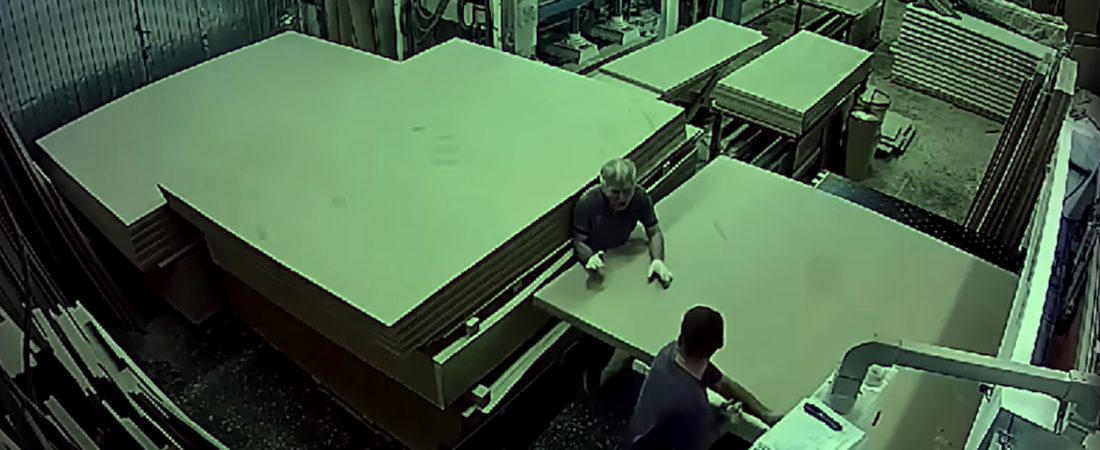
- The cargo was unstable and the materials had been stacked incorrectly.
Forklifts and material-handling trucks are necessary in industrial establishments, but when heavy, stacked or loose materials are being transported there is a great deal of overhead and a high risk of crush injuries.
The Hazard Dynamics
If timber, metal, or raw materials are lowered or moved in tall stacks or ones that are not well secured, sudden changes in the centre of gravity may cause the load to slide or fall down. Anyone else who is working within the fall zone is at risk of suffering serious injuries from impact or being crushed. Also, when makeshift lever devices (for example, wooden planks or crowbars) are used during a collapsing situation, the rescuers are exposed to further dangers.
Preventive Measures and Protocols
When securing cargo and preparing units, it is necessary to band the materials, shrink-wrap them, or place them on pallets before transporting them.
Set up strict safety zones that keep people clear around areas where forklifts are loading or unloading, the size of these zones being at least equal to the height of the load being handled.
The standard emergency response procedure requires that, if there is a structural shift or a spill, the staff should use authorized lifting equipment and trained response teams instead of making their own manual lifting attempts.
- The incorrect use of compressed gas cylinders as structural supports
Cylinders that contain compressed gases hold volatile chemicals or gases which are stored at very high pressure. Even though there are strict regulatory guidelines, workers at times use empty or stored cylinders as casual seats or as temporary supports.
The Hazard Dynamics
Pressurized gas containers have a great deal of kinetic energy and if a cylinder is subjected to side forces, to an accidental blow, or to being near hot work—such as arc welding or torch cutting—it may cause the valve assembly to rupture or lead to mechanical failure. When a valve is sheared, the heavy steel cylinder turns into an unguided missile and the high-pressure gas is released, which can either ignite immediately or result in serious physical impact.
Preventive Measures and Protocols
Cylinders have to always be kept in an upright position and held in place with the use of chains or special racks, and when they are not being used actively the protective valve caps must be screwed on tightly.
Cylinders should be kept at a safe distance from welding work, open flames, and electrical arcs.
There is to be a zero-tolerance policy regarding misuse: workers should be made aware that gas cylinders are strictly speaking pressure vessels and must never be used as furniture, footrests, or as structural supports.
- The keeping of flammable materials near ignition sources
Storage areas of a large scale which contain synthetic foam, textiles, paper, or organic polymers are prone to a high risk of catching fire; a small spark or intentional misuse of flame in such places can cause a widespread fire to break out within a few seconds.
The Hazard Dynamics
When open-cell foam and industrial roll stock catch fire, they give off a very high amount of heat. Flammable materials then quickly reach the point of flashover, which causes the storage areas to be filled with thick toxic smoke, uses up the oxygen in the atmosphere, and leads to the flame spreading rapidly along the structural surfaces and over the nearby piles of material.
Preventive Measures and Protocols
In storage areas where combustible goods are kept, open flames, smoking and unauthorised electrical equipment must be strictly prohibited.
Install automatic suppression systems which are localized and have a quick response rate, for example high-density deluge sprinklers, according to the particular fire load of the material being stored.
Facilities are required to carry out thorough fire safety training, conduct regular safety audits, and enforce strict security measures in order to remove any unauthorized ignition sources.
- Manually dealing with leaks of high-pressure fluid
In industrial process engineering, high-pressure fluid lines, steam conduits and beverage dispensing systems are essential components. If a leak happens at a joint or at the nozzle of a valve, there is a natural tendency for the workers to try and manually plug or cover the leak.
The Hazard Dynamics
The forces resulting from pressurized fluids escaping through small orifices are sufficient to cause high-pressure injection injuries, serious thermal burns, or mechanical damage. It is useless to try to stop a leak by hand or by using temporary barriers, since this puts the operator at risk of severe physical trauma.
Preventive Measures and Protocols
Workers are required by the operating procedures to instantly switch on the emergency stop controls or to isolate the upstream shut-off valves rather than making direct contact with the leaking component.
Carry out routine preventive maintenance by carrying out scheduled non-destructive testing, checking the gaskets, and servicing the pressure relief valves in order to prevent degradation before leaks happen.
When personnel are working in the neighbourhood of high-pressure fluid lines they must wear the correct kind of eye, face and body protection in order to guard against sudden releases.
- Hazards involving contact and entanglement with rotary machinery
Nip points, the in-running rollers, and rotating shafts are among the oldest and at the same time most persistent mechanical hazards found in manufacturing plants, especially in the paper, packaging, and textile industries.
The Hazard Dynamics
In-running nip points cause material to be drawn in through counter-rotating or single-roller surfaces. If an operator reaches into an area where a roller is in motion in order to smooth the material, adjust its alignment, or clear a snag, the rotational friction of the roller can suddenly catch onto loose clothing, gloves, or skin and pull the operator’s limb into the mechanism at a speed faster than the human body can react.
Preventive Measures and Protocols
Machine guards that are fixed and interlocked: physical barriers must be provided to shield the in-running nip points so that human hands cannot enter the area of operation when the machine is switched on.
When carrying out maintenance, cleaning, or alignment adjustments, the machine must be fully de-energized, disconnected from any power sources, and then locked out in accordance with the standard procedures.
When using extension tools, operators should prefer long-handled alignment tools or automated feed mechanisms and should not put their hands anywhere near the moving rollers.
- Incidents involving pedestrians and equipment in areas where work is being carried out by blind workers
Industrial sites have always had a mixture of people walking around and mobile equipment used for handling materials. If visibility is blocked or communication fails, then the chance of a collision between a vehicle and a pedestrian rises considerably.
The Hazard Dynamics
Forklifts and other heavy vehicles have considerable blind spots, require a long distance to stop, and are noisy enough to hide the fact that they are approaching. If a pedestrian goes into a shared corridor without first making sure that the driver has seen them, they may easily end up in the path of an oncoming machine.
Preventive Measures and Protocols
Mobile equipment should be fitted with functional backup alarms, flashing beacons, and floor-projected blue or red perimeter warning lights.
The pedestrians have to make direct eye contact with the operator and get clear permission for it, either by means of a hand signal or by radio, before they enter the path which the vehicle is using.
In modern plant designs, layout engineering places a focus on separating the areas used for forklift movement from those used for people walking by means of structural guardrails.
- Structural Failures in Molten Metal Transport Systems
Foundries and large-scale metallurgical plants work with molten alloys at temperatures that go above thousands of degrees Fahrenheit and for this purpose they need special cranes, ladles, tilt mechanisms, and supporting structures.
The Hazard Dynamics
Mechanical degradation, thermal fatigue, or faults in the structural pins of the ladle support system may result in a disastrous failure while the metal is being poured. In the event that a support arm or tilt hook fails when it is under load, hundreds of pounds of molten metal will immediately spill onto the plant floor, leading to explosive reactions when it comes into contact with moisture, posing serious fire hazards and causing damage to the structure.
Preventive Measures and Protocols
Critical load-bearing components, pins, and hooks on molten metal ladles have to be regularly tested using ultrasonic, magnetic particle, or X-ray methods in order to pick up any subsurface fatigue cracks.
Redundant Hoisting Mechanisms: Ladles should feature redundant mechanical supports or safety catches designed to hold the load if a primary
REFERENCES:
Video: She Got Too Close… Then This Happened
Source: Fail to Fix, (published on: 2025-09-18)
Summary: This video presents a compilation of industrial close calls and safety incidents across various workplace environments, including timber yards, wood factories, chemical/welding areas, foam storage facilities, breweries, paper mills, textile plants, and foundries. Each case study details the mechanical failure or human error that led to the incident-such as crossing active machine paths, improper material handling, misusing compressed gas cylinders, working near active rollers, manually suppressing high-pressure leaks, and equipment failure during molten metal pours-and provides actionable safety lessons and operational guidelines to prevent future occurrence.