
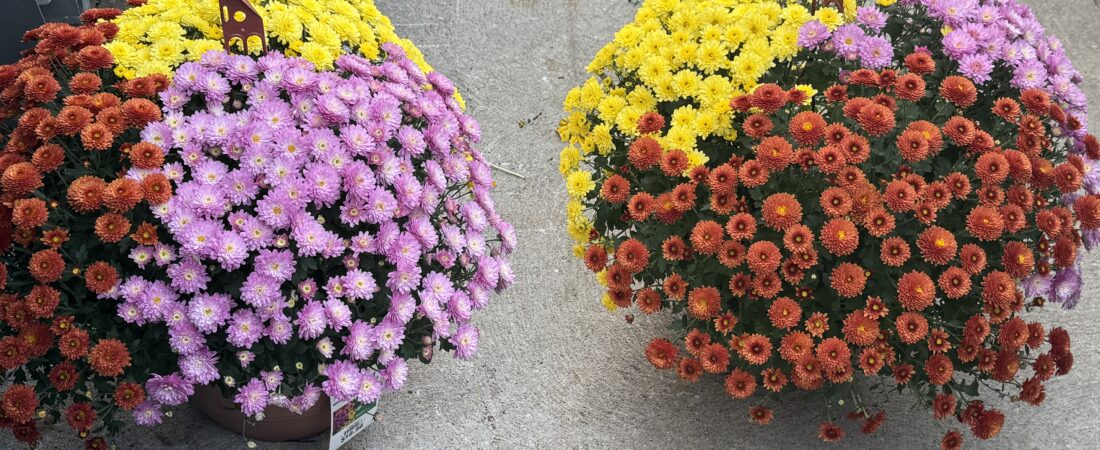
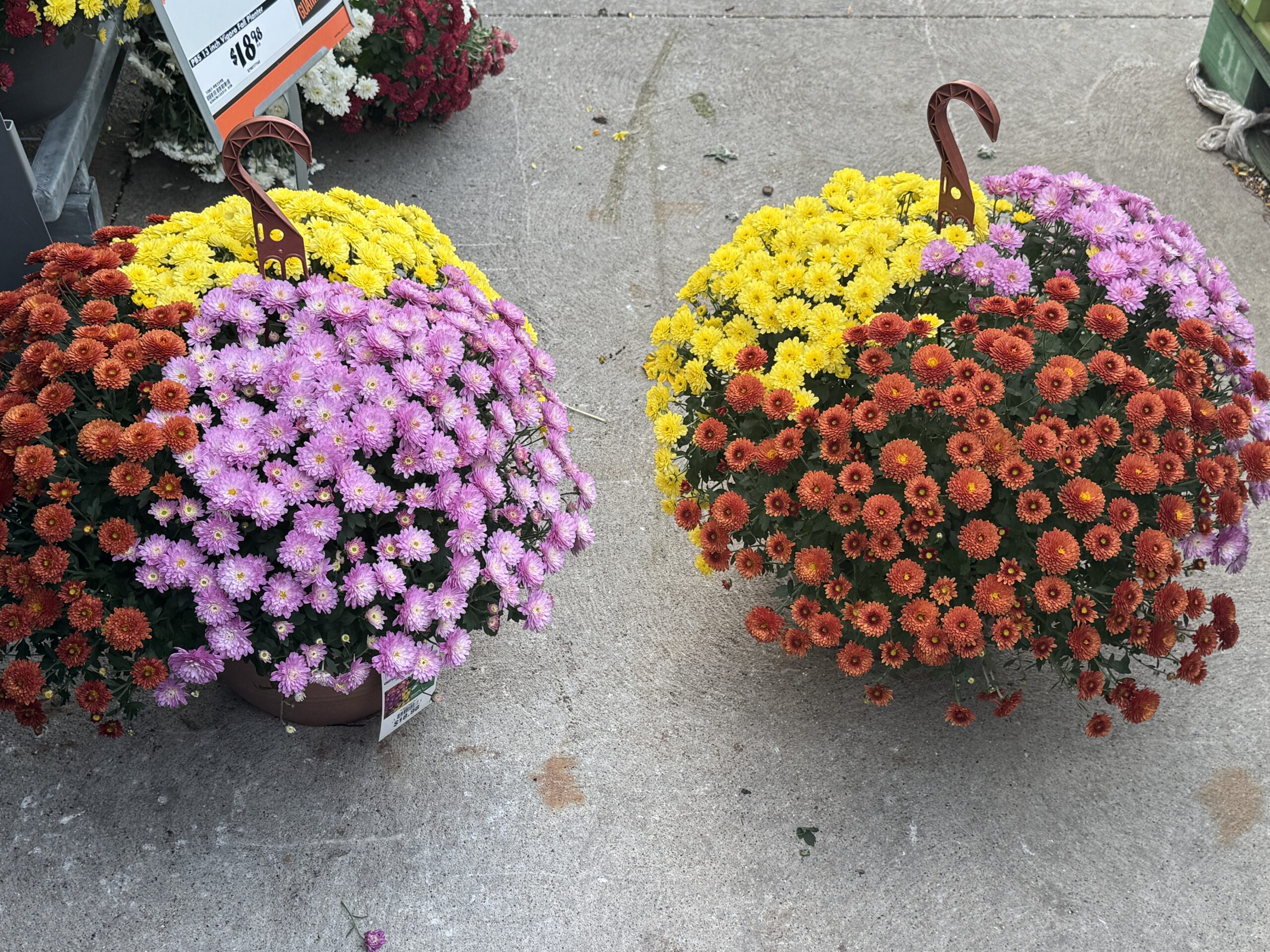
When the fresh autumn air has taken control and the leaves have changed to warm, fiery colours, gardeners and decorators reach for one classic flower in order to provide a last burst of vivid colour—the chrysanthemum (also known as “mum”). This flower has tight groups of bright petals in rich rust orange, soft lavender and sunny yellow, and the vibrant floral balls are without any doubt the emblematic flowers of the fall season.
Origin and History
The chrysanthemum has been around for more than 3,000 years and originated in ancient East Asia. It was first grown in China in the 15th century BC and was respected not only for its beauty but also as a noble herb thought to have the ability to grant life and longevity; indeed, an ancient Chinese city was named Ju-Xian, which means “City of Chrysanthemum.”
In Japan the flower was introduced by the 8th century and soon won over the imperial court. It was adopted as the official emblem of the Emperor, a symbol of supreme status, noble character, and good luck which is still deeply rooted in Japanese culture today.
Global Spread and Usage
Chrysanthemums were brought to Europe in the late 18th century and had reached North America by the 19th century. At present, these hardy flowers are admired all over the world for their ability to withstand early frosts. Whenever they are grown in hanging baskets, planted in garden beds, or placed alongside pumpkins on the front porches, mums add a sense of warmth, history, and tremendous visual impact to any autumn landscape.
A Beautiful Autumn Tradition
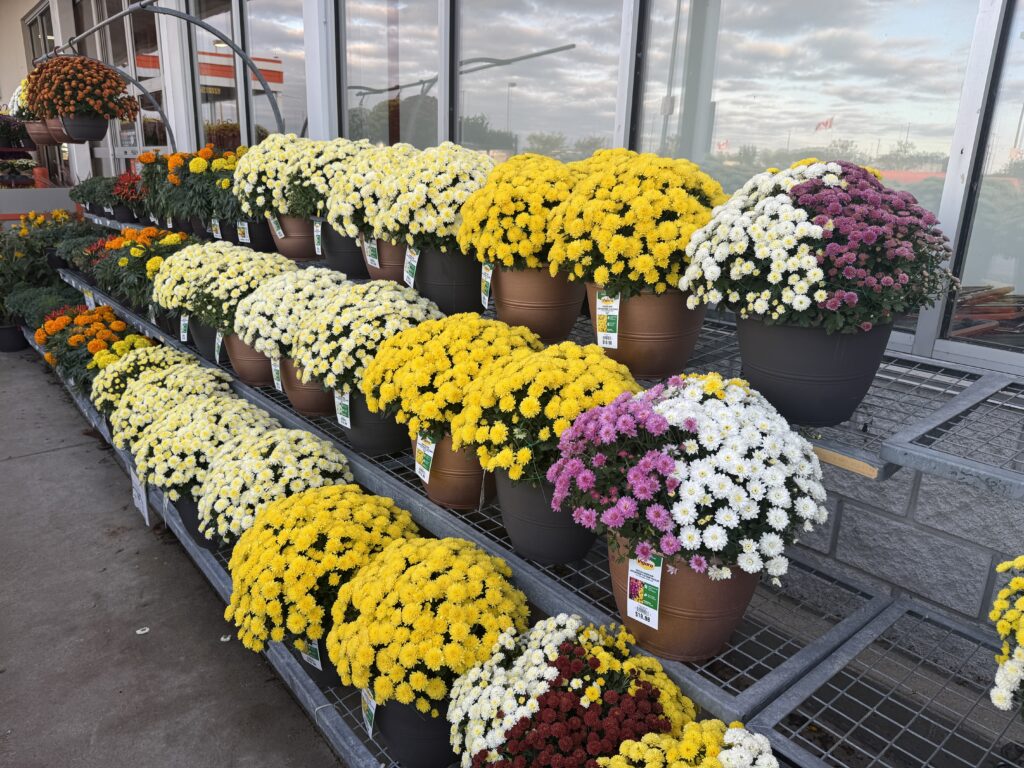
In addition to their rich historical background, mums have won over ordinary homeowners and people who live in cities as well. When the summer annuals begin to fade, people go to local garden centres, hardware stores, and farmers’ markets to buy these impressive potted domes. Their great popularity is due to their versatility and outstanding resilience—mums do well in the cooler autumn temperatures and can tolerate light frosts, so they keep the entrances bright long after the rest of the garden plants have stopped growing.
Various Uses and Ways of Displaying Them
The different ways in which people use chrysanthemums are just as diverse as the varieties themselves:
- Curb Appeal and Porch Arrangement: The most typical way of using potted mums is to decorate the outside of the house. When placed next to traditional pumpkins, corn stalks, and woven baskets, the colourful potted mums on the front steps give visitors and people passing by a welcoming seasonal atmosphere.
- Balconies and Hanging Displays: For city dwellers who have little or no yard space, hanging baskets filled with multiple coloured flowers offer a simple method of adding vertical colour to patios, balconies, and window boxes.
- Fall Events and Centerpieces: Nowadays, growers often grow single pots with two or three matching colours—for example, bright yellow combined with deep magenta or rust red—making them ready to be used as centrepieces at Thanksgiving meals, fall weddings, and neighbourhood autumn festivals.
- Cultural and Memorial Ceremonies: In many areas of Europe, white and purple chrysanthemums have strong symbolic meaning and are traditionally used as memorial flowers at celebrations of All Saints’ Day. At the same time, in Asian cultures, dried chrysanthemum flowers are still used to make calming, fragrant teas which are appreciated for their health benefits.
In the end, whether they are used as a simple decorative element or as a centerpiece for seasonal events, the chrysanthemum is still the number one flower of autumn, bringing life, warmth, and a sense of nostalgia to homes all over the world.
Guidelines for cultivation and the growth cycle
In order to produce the thick, pillow-shaped domes of colour that are seen in professional nurseries, it is essential to use the correct planting methods and to be patient. Although fully grown flowering pots are available ready-made in the autumn, if one starts the plants from young cuttings or small nursery plants then a particular timetable and a careful care routine are needed in order to bring them to their full potential.
Planting season and position: Spring is the best time of year to plant chrysanthemums either in gardens or in larger containers. By planting early the roots have sufficient time to become established before having to cope with the stress of summer heat and with blooming in the autumn. They need full sunlight—at least six hours of direct sun each day—in order to produce dense blooms; if they do not get enough sun they will have tall, weak stems and few flowers.
Soil preparation and drainage: Chrysanthemums need soil that is rich in nutrients and well-drained, with a slightly acidic to neutral pH. If the soil does not drain well and remains wet then root rot will occur rapidly. Adding organic compost or peat moss to heavy clay soils greatly improves aeration and drainage.
The growth timeline (12 to 16 weeks): The process of growing a small plant into a large floral globe takes about three to four months:
Weeks 1 to 4 (Establishment): The young plants develop their root systems and start to produce foliage.
Weeks 5 to 8 (The pinching stage): In order to obtain the typical rounded shape, growers regularly ‘pinch back’ the stem tips by removing the top inch of growth every few weeks until early July. This causes the plant to branch out rather than growing upwards, thus producing hundreds of new flower buds.
Weeks 9 to 12 (Bud formation): As the days get shorter in late summer, photoperiodic signals cause the plant to stop its vegetative growth and to form tight clusters of buds.
Weeks 13 to 16 (Full bloom): The buds enlarge and open out to form bright floral displays which last for four to six weeks.
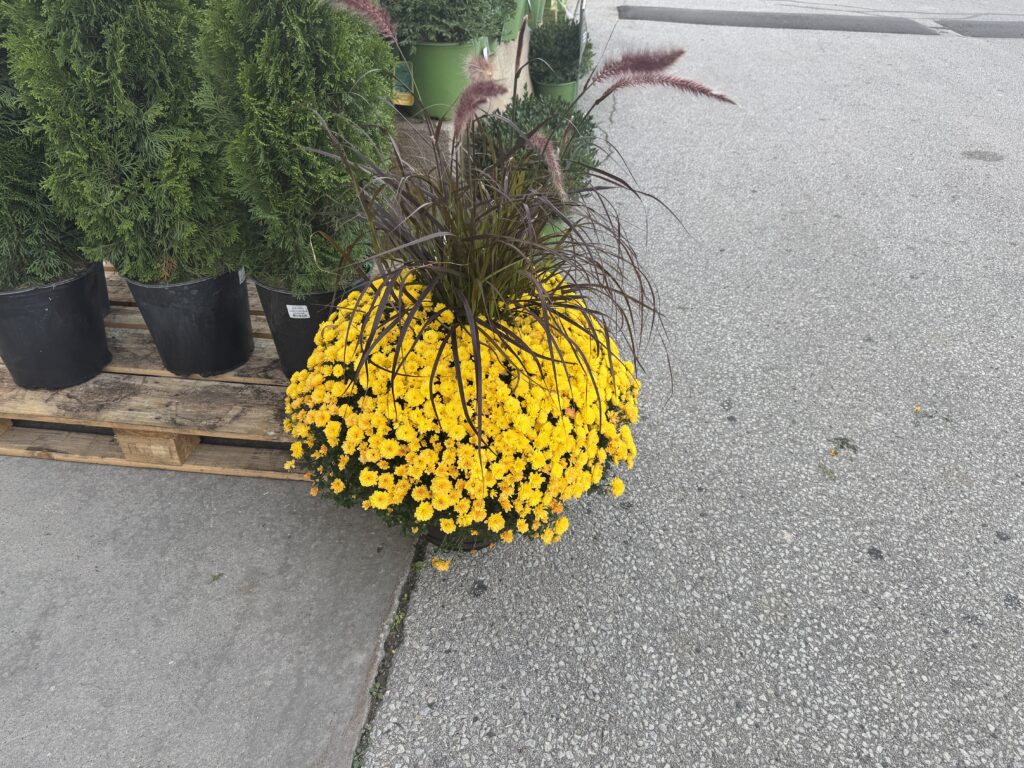
When mums are grown in containers together with textural elements such as ornamental purple fountain grass—as shown above—this creates a remarkable contrast in height and movement. With regular watering at the base and very little other maintenance, these hardy perennials give growers year after year an exceptional display in the fall.
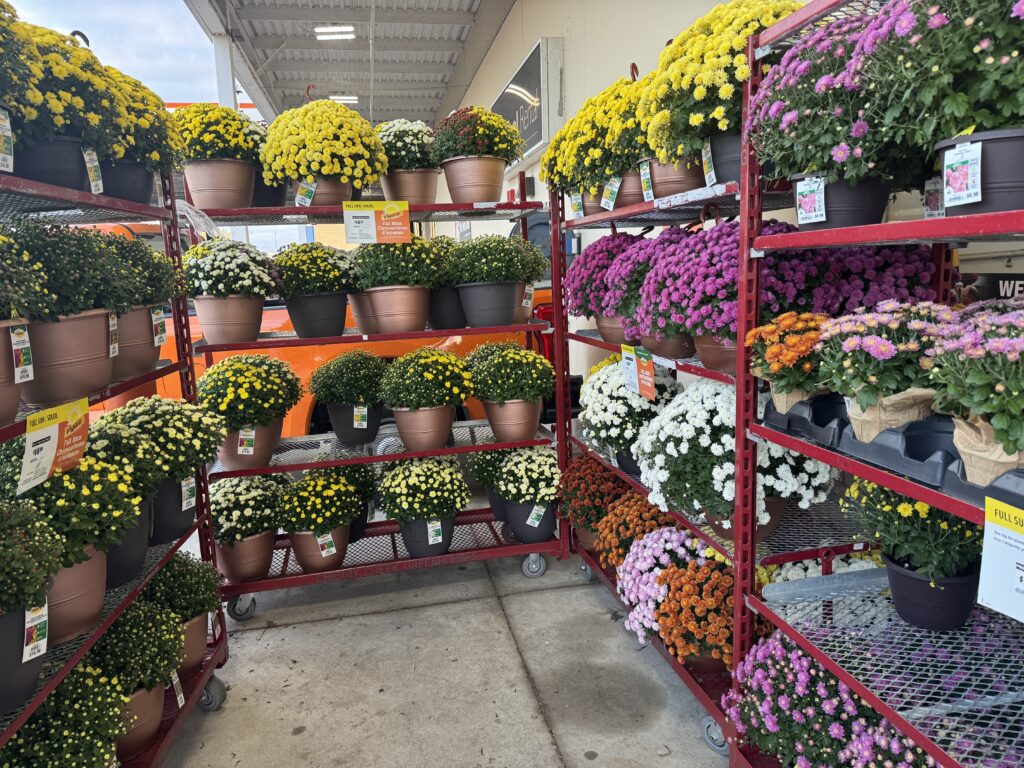
Conclusion: The Enduring Legacy of Fall’s Favorite FlowerAs October goes on and winter draws near, chrysanthemums provide a splendid concluding act to the gardening season. The retail displays, which are filled with multiple layers of pots in yellow, maroon, lavender, and white and are piled high, clearly show just how important this plant has become in the context of seasonal customs. They are not simply temporary decorations; mums act as a link between a rich botanical history, skilled horticultural practice, and the common seasonal traditions.
Winter Care and Preparation for Next YearFor people who want to keep their potted mums beyond their first autumn bloom, winter care is both easy and essential:
Overwintering in Containers: After the plant’s foliage has died back following a severe freeze, the potted mums can be moved into a space that is free from frost, for example into a cool garage or basement. The soil should be kept only slightly moist until the arrival of spring warmth, which will indicate the beginning of new growth.
In-Ground Survival: Mums that were planted at the beginning of the season can survive the cold winter outdoors if they are heavily mulched with straw or with boughs of evergreen to protect the root systems from the freeze-thaw cycles.Spring Renewal: When fresh green shoots appear from the base of the plant in early spring, the dead stems should be cut back, thus starting the annual growing cycle again.From their beginnings in the imperial gardens to the lively displays now seen in local markets, chrysanthemums continue to attract plant enthusiasts all over the world. Their exceptional resilience, deep symbolism, and stunning autumn colour ensure that mums will stay the supreme symbol of fall warmth and beauty for many generations to come.
Article Reference & Credits
Publisher & Media Owner: Canadian Newz (https://CanadianNewz.com)
Content Creator / Author: Canadian Newz
Photography Credits: All photographs and visual media featured in this article were captured by Canadian Newz and are protected under copyright.
Licensing & Usage: No part of this text or image content may be reproduced, republished, or redistributed without explicit written permission and proper source attribution back to Canadian Newz