
Introduction: The Fragile Reality of Human Flight
Modern aviation is generally regarded as one of the most remarkable achievements of human technology. Each day, hundreds of thousands of commercial, military, and private planes fly through the air, linking together different continents and allowing for quick travel. Yet, even with strict safety procedures, redundant systems, and thorough pilot training, the room for error in flying is very narrow. If mechanical failures, bad weather, or human mistakes take place, a normal flight can suddenly become a serious survival situation.
Studying actual aviation incidents gives important clues about the structural weaknesses involved, the way decisions are made during a crisis, and the way safety has developed over time. By looking at recorded emergency landings, accidents at airshows, and highway touchdowns one can see the fine balance there is between the mechanical reliability of aircraft and the possibility of an unexpected disaster.
Mid-Air Collisions and Airshow Disasters
Airshows feature precise maneuvers and fast acrobatics. Yet when several aircraft are flown close to one another at a low altitude the usual margins of error are eliminated and the pilots have almost no recovery time if anything goes wrong.
At the Mountain Home Air Force Base during a public airshow display, two EA-18G Growler planes collided in mid-air as they carried out close-formation flights. The collision damaged the main flight control surfaces and left both aircraft unable to be controlled. Luckily, all four crew members were able to use their ejection seats in time and survived, which shows how important modern emergency ejection systems are.
The Shoreham Airshow Tragedy: While carrying out a looping manoeuvre at the airshow, a classic Hawker Hunter jet descended to a level from which it could not recover. Since it was impossible for the plane to get back to a higher altitude, it crashed straight onto the A27 dual carriageway outside the airfield boundary. The effect of the collision destroyed a number of vehicles and sadly resulted in 11 people on the ground dying, thus underscoring the particular safety hazards involved in carrying out aerial acrobatics close to public roads.
At El Toro Air Station, a restored F-86 Sabre was carried out in a steep vertical turn in front of thousands of spectators. The pilot could not pull out of the dive and so the plane crashed into the runway at high speed. Although the pilot died immediately when it hit the ground, the debris stayed within the asphalt of the runway and thus no spectators were injured.
Mechanical Failures and Airport Deck Collapses
Aircraft parts are constantly under stress and are regularly inspected; however, structural fatigue, hydraulic failures, and faults in the landing gear can still happen suddenly during takeoff or landing.
+———————————————————————–+
| COMMON AVIATION FAILURES |
+————————————+———————————-+
| FAILURE TYPE | PRIMARY RISK FACTOR |
+————————————+———————————-+
| Landing Gear Collapse / Malfunction| Airframe belly friction, fire |
| Total Engine Flameout | Loss of thrust, immediate glide |
| Catastrophic Structural Detachment | Uncontrollable pitch/roll, crash |
| Severe Crosswind Shear | Wingtip/tail strike, runway loss |
+————————————+———————————-+
When a Lufthansa Boeing 787 that was at Frankfurt Airport and ready to fly to Los Angeles remained stationary, its nose landing gear suddenly caved inwards and the front part of the aircraft dropped heavily onto the tarmac. Even though there were no passengers on board at that time, ground maintenance staff who were inside suffered injuries, thus highlighting the importance of adhering to strict safety procedures in ground service operations.
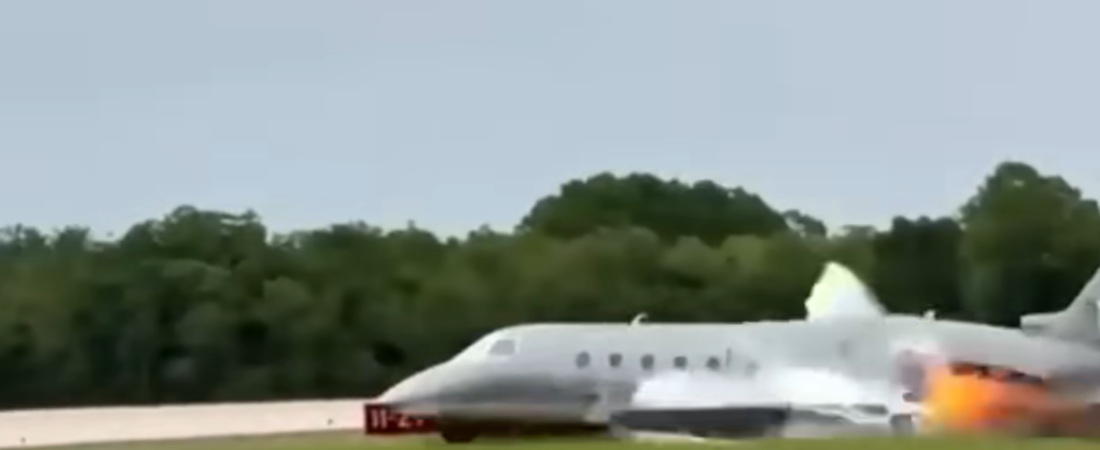
Flight testing frequently brings high-altitude aircraft to the point where their mechanical equipment is stretched to the limit. While returning to its base in Houston, a NASA WB-57 research aircraft experienced a main landing gear failure which could not be recovered from. Having no other choice, the flight crew carried out a belly-landing directly onto the tarmac. As it skidded along the runway with intense sparks and friction caused by the rubbing, the aircraft was safely stopped and no injuries were suffered by the crew.
For LOT Polish Airlines Flight 16 (a Boeing 767 making a belly landing): since the aircraft had a total hydraulic failure which meant that the landing gear could not be deployed, the crew circled for several hours in order to use up the fuel. With fighter planes of type F-16 providing escort, the pilot carried out a smooth belly landing with the gear down on a runway that had been prepared with foam. All 231 passengers and members of the crew were able to evacuate safely with no injuries occurring.
Emergency Highway Landings: Pilots Forced onto Public Roads
If an aircraft experiences a total engine failure a long way from an airfield, the pilots have to carry out urgent emergency force-landings; in inhabited or forested areas highways are usually the only open, level surfaces that are available.
When there is a double-engine failure, the pilots immediately work out the glide distance in order to see whether it is possible to reach a runway.
If the airfield is beyond range, highways can be used since they are straight and made of concrete, although they do have special hazards such as traffic, overhead wires, and overpasses.
When attempting to land, the pilots try to align themselves with the direction of the traffic in order to reduce the relative impact force compared to the moving cars.
A good example took place on Interstate 95 in Florida, when a light aircraft suffered a failure of both engines. Since there was no runway nearby, the pilot managed to steer the plane onto the highway. On landing, the aircraft’s undercarriage hit a car which was in motion, breaking the windshields and causing parts of the wing to detach before the plane stopped. Although the collision occurred, both the driver of the car and the people on board the aircraft sustained only minor injuries. In a similar situation in California, a private plane that had experienced an engine failure landed on a busy highway, hitting a guardrail and causing the spilled fuel to catch fire, but all of the passengers escaped uninjured.
Low-Altitude Engine Loss After Takeoff
Takeoff is one of the most important stages of flight since, with the aircraft low, moving slowly and climbing with high engine power, a sudden loss of engine thrust right after becoming airborne leaves the pilots with very little altitude in which to carry out troubleshooting or make any maneuvers.
When TransAsia Airways Flight 235 left Taipei, one of its engines failed, and this was made worse by the improper methods used to shut down the engine as part of the emergency response. The plane then lost a large amount of altitude above the city, banking sharply until it reached nearly 90 degrees. Its wing brushed against an overpass and a taxi before it crashed into the Keelung River. Of the 58 people on board, 15 survived, providing a stark reminder of how quickly situational awareness can decline in the course of a catastrophic engine failure.
When the UPS cargo plane had just taken off from Louisville, one of its engines came off and a fire broke out within the aircraft. The loss of that engine seriously damaged the wing controls and as a result the plane was unable to climb. The jet then crashed in an industrial area next to the airport, leading to the deaths of the members of the flight crew and underscoring the devastating effects of structural engine detachments at low altitudes.
The Evolution of Aviation Safety Standards
All aviation accidents—no matter whether they are due to mechanical failure, severe weather, or the actions of the pilot—are thoroughly investigated by civil aviation bodies such as the NTSB and ICAO; ongoing improvements in the industry are achieved through the data obtained from flight data recorders (FDR) and cockpit voice recorders (CVR).
There is a greater focus on Crew Resource Management (CRM) and on training using simulators for unexpected mechanical failures when at low altitudes.
There should be strict inspection procedures to improve non-destructive testing of airframes and landing gear mechanisms so that structural fatigue can be detected before it leads to collapse.
The margin controls at airshows involve imposing more stringent regulatory distances between the flight paths and the areas where spectators are present as well as the public roads.
Aviation engineering and pilot training are still constantly working to make air travel safer for everyone as a result of a careful examination of past emergencies.
REFERENCES:
Video: Accidentes de Aviones Captados en Cámara ✈️ | Momentos Que Erizan la Piel
Source: FULL TOP’S, (published on: 2026-09-12)
Summary: The video consists of actual footage of dramatic aviation accidents and emergency landings that have occurred all over the world. It includes a variety of situations such as mid-air collisions which took place at airshows, emergency belly landings caused by failures of the landing gear, forced landings on busy highways, engine failures at low altitude after takeoff, and severe attempts to land in crosswinds. For each incident it explains the circumstances of the flight, the actions taken by the crew in stressful situations, and the final result of the event.