
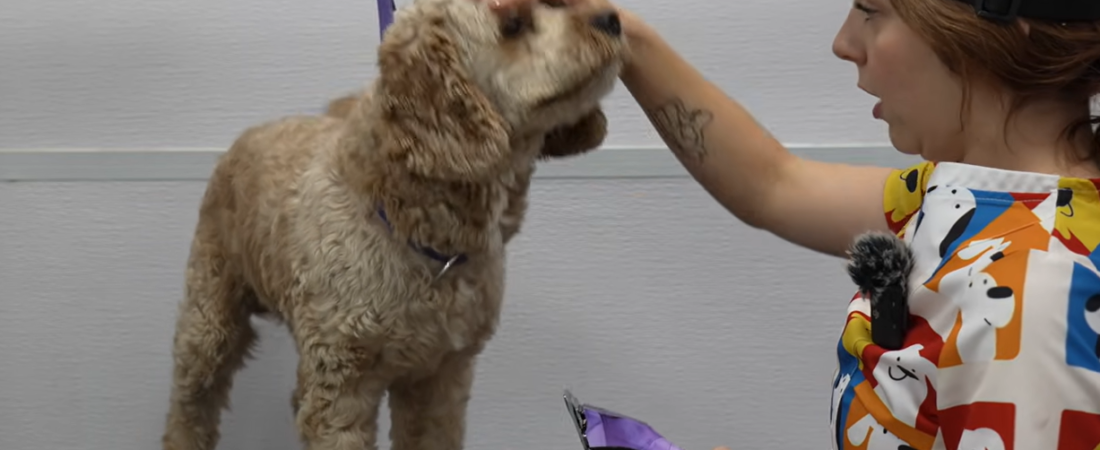
Pet owners are usually left feeling stressed, guilty and confused when a local grooming salon refuses to take a pet after the animal has been a regular client for three years. The salon said that the dog had become far too difficult to handle without the use of a two-person team, which left the owner having to rush around to find a professional willing to groom their cherished pet. It turns out that this kind of situation is more common than many pet owners realise. Can a dog that has been described as “untreatable” or “aggressive” by one grooming establishment be safely groomed by another without having to be heavily sedated? By looking at the real-life grooming journey of a lively Cockapoo named Rex, we learn why dogs develop grooming anxiety, how gentle handling methods can reduce their reactivity, and how owners can deal with underlying health problems such as chronic ear infections and paw allergies.
The Backstory: Why Do Salons Reject Dogs?
Professional dog grooming salons work on tight schedules and place great importance on both safety and efficiency. If a dog starts to show reactive behaviour — for example, barking continuously, thrashing about or mouthings things — this can cause a chain reaction affecting all the other animals in the salon. Because high-volume salons usually don’t have the time or the quiet environment needed to deal with severe anxiety, this becomes a problem. In Rex’s case, the previous salon had stated that he needed two handlers and that his loud barking was causing other animals to become frightened. However, they gave the owner very little explanation as to why the dog was behaving in this way: was he actually aggressive or was he simply overwhelmed?
When a dog reacts strongly during a grooming session, it is generally due to one of three causes:
Fear and a sense of spatial insecurity: Intense eye contact from strangers, the use of loud, high-velocity dryers or unfamiliar equipment can trigger a fight-or-flight reaction.
Associated pain: Underlying medical conditions, such as raw and inflamed paw pads or active yeast infections in the ears, make touch physically painful.
Learned avoidance: If a dog finds that thrashing about or nipping causes the groomer to stop using or pull back a tool, it will carry out those behaviours each time it feels uncomfortable.
Decoding Canine Body Language: Aggression versus Fear
One of the most important steps when dealing with a “difficult” dog is to correctly identify the cause of the behaviour. Reactions under stress are often wrongly labelled as aggressive when in fact they are based on fear and are a form of self-defence.
Navigating the First Meeting
The first impression has a major influence on the entire grooming session. When meeting an anxious or protective dog:
Avoid direct eye contact: Keeping eye contact going for a long time can be seen by a nervous dog as a challenge or a threat. By looking away, the dog is free to study you on its own terms.
Pay attention to the way the dog vocalises: Excessive whining or high-pitched barking usually shows that the dog is over-aroused and nervous, not that it has malicious intentions.
Use safety equipment as a safety measure: Wearing ear protection protects the groomer from the loud, constant barking that is a source of stress, helping to keep the handler calm. Putting on a soft muzzle in advance ensures safety during the more sensitive parts of the process without leading to physical confrontation.
When Rex arrived, by avoiding direct eye contact he was able to approach, sniff and gradually lower his defences. Even though he barked loudly, his body language showed that he was in a state of high anxiety rather than displaying direct territorial aggression.
Step-by-step Breakdown of a Stress-Free Grooming Session
Grooming a sensitive dog requires a well-planned sequence of actions that places a strong emphasis on speed, comfort and as little restraint as possible.
+———————————–+
| 1. Pre-Groom Check and Cleaning |
| (Short shave to minimize heat) |
+———————————–+
|
v
+———————————–+
| 2. A gentle hydrotherapy wash |
| (Low-pressure stream water) |
+———————————–+
|
v
+———————————–+
3. Drying under low stress
| (Crate dryer vs high-velocity) |
+———————————–+
|
v
+———————————–+
| 4. Precision Trimming of the Paws |
| (Short bursts, positive breaks) |
+———————————–+
- For dogs with dense or curly coats, such as Poodles and Spaniels, it takes a long time to dry out wet fur. By giving a quick pre-bath shave using a short blade (for example, a #7), you remove a lot of the excess fur and this greatly reduces the amount of time the dog has to spend being blown dry with noisy blow dryers.
- Using tailored bathing techniques Many dogs become very anxious when exposed to strong water sprays. By substituting high-pressure nozzles with a gentle stream of warm water, the level of sensory input is reduced, which allows the dog to become more relaxed in the bath.
- When it comes to drying, high-velocity blow dryers are very efficient, but the forced air and the loud noise of the motor can scare sensitive animals. Using milder methods that rely on ambient air, such as crate dryers, gives anxious dogs the necessary chance to relax and calm down.
Overcoming Specific Triggers: Paws, Ears, and Face
During any grooming session, certain areas of the body are much more likely to cause sensitivity.
Target Area Common Sensitivity Cause Professional Handling Strategy
Front Paws Environmental allergies, a history of quicking, sore joints Use a supportive harness to help with balance; carry out the work in short sessions; do not use nail clippers if the nails are naturally short from walking.
Ears Yeast infections, accumulation of moisture, ear mites Never pull or yank; clip the edges with care while holding the head steady; do not flush the painful and inflamed canals without first getting veterinary approval.
Face & Muzzle Vibration from the clipper near the eyes, restriction of movement Use hand-shears with care; gently secure the beard and chin; stop immediately if the dog thrashes to prevent scissor injuries.
The Root Cause of Paw Sensitivity
It is very common for dogs to accept having their hind paws touched while at the same time being very protective of their front paws. The front legs carry most of their body weight and contain their main defence mechanism.
Moreover, if a dog has environmental allergies, it often tends to lick and chew its front paws. Moisture gets trapped in the paw pads, leading to inflamed and tender skin that causes pain when the paws are handled or shaved. If a dog has had a nail cut into the sensitive quick in the past, it forms a lasting memory that associates handling the paws with sharp pain.
Allergies, Diet, and Ear Health in Spaniel and Poodle Mixes
Doodle breeds and Spaniel mixes are well known for their soft, low-shedding coats, but they are just as famous for having delicate skin and for suffering from chronic ear infections. Their long, floppy ears block airflow, so moisture gets trapped and this creates the ideal conditions for yeast and bacterial growth.
Exploring Dietary Factors
When a pet has repeated ear infections and itchy paws even after regular visits to the vet, dietary sensitivities are often looked into.
Commercial Kibble and Yeast: Diets high in carbohydrates can sometimes contribute to systemic yeast problems in susceptible animals.
Alternative Diets: Many pet owners look into home-cooked meals guided by a veterinarian or balanced raw diets in order to eliminate common protein allergens (such as chicken or beef) and fillers.
Gradual Transitions: Any change to a dog’s diet should be done under the advice of a professional veterinarian to make sure the dog receives all the necessary nutrients, especially for digestive health.
Re-training Your Dog for the Grooming Table: Tips for Pet Parents
If your dog has been turned away from a grooming salon or shows stress during at-home grooming, you should not lose hope. Behavioural change requires time, consistency, and patience.
Desensitise Paw Handling at Home: Every day, gently touch your dog’s legs and feet without using any tools. Each time you give a gentle touch, follow it up with a high-value treat.
Skip Unnecessary Nail Trimming: If your dog often walks on concrete or hard pavement, their nails may wear down naturally. If clipping the nails causes extreme panic, ask your groomer to temporarily skip using the clippers and to concentrate solely on handling the feet.
Seek One-on-One Salons: Large shops with many barking dogs can be overwhelming for an anxious dog. Private mobile groomers or salons with a single handler provide a quiet and low-distraction environment.
Consistency is Key: It is important to keep grooming appointments regular. Waiting too long between grooms leads to mats and tangles, which in turn make future visits painful experiences.
By changing from forceful restraint to calm and adaptive handling, even dogs described as “difficult” can learn to accept grooming as a safe and peaceful routine.
REFERENCES:
Video: No One Would Groom This Difficult Dog…Here’s What Happened
Source: Girl With The Dogs 2, (published on: 2026-01-01)
Summary: In this video, professional groomer Vanessa works with Rex, a Cockapoo who was turned away by his previous salon for being too vocal and difficult. Vanessa carefully assesses Rex’s behavior, determining that his resistance-particularly around his front paws-stems from fear, inflamed paws due to allergies, and a anxiety over nail clipping rather than true aggression. Using patience, proper protective equipment, ear protection, and strategic grooming steps (including a pre-bath shave down and low-stress bathing), she successfully completes his groom without the need for sedation. Vanessa also shares insights into how diet and allergies can affect ear and paw health, offering advice on how pet owners and groomers can work together to rebuild an anxious dog’s confidence.