
The modern shipping industry acts as the unnoticed foundation of global trade, slowly transporting more than 80 per cent of the world’s goods over huge and dangerous oceans. Every day millions of metric tons of cargo, fuel and raw materials are carried on large bulk carriers, oil tankers, container ships and luxury vessels. However, even with the use of advanced navigation technologies, satellite tracking, GPS systems and well-trained staff, the sea is still a place ruled by unpredictability and enormous physical inertia. When difficulties occur either in open waters or in crowded maritime passages, the consequences are never small; they take the form of disastrous collisions, violent explosions and mechanical failures amounting to millions of dollars.
Looking at actual maritime accidents provides important insights into vessel behaviour, environmental dangers, human mistakes, and the powerful effects of hydrodynamics. By examining significant maritime incidents, one can identify the main operational lessons which modern seafarers and logistics specialists have to deal with every day.
- Error in navigation, traffic congestion, and human factors
A major cause of collisions between vessels is human mistake combined with the high volume of traffic in certain areas. Places such as the Bosphorus Strait in Turkey or the entrances to busy harbours are high-risk spots since one simple error can lead to serious results.
Right-of-way rules—those set out in the International Regulations for Preventing Collisions at Sea (COLREGs)—determine the clear priorities for vessels when they are entering narrow waterways or busy ports. Yet such safeguards can be overcome by miscommunication, by sudden steering failures, or simply by bad judgments of speed:
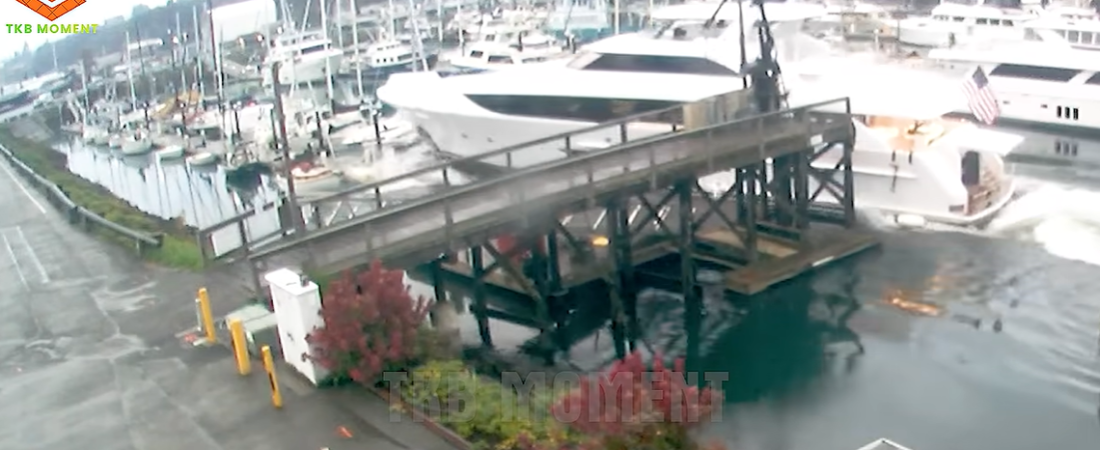
When vessels are entering or leaving port harbours it is essential that they keep close contact and be aware of their position. If they do not give way near breakwaters they will have no room for manoeuvre and will thus suffer sudden and direct collisions.
In narrow areas mechanical failures—such as the rudder getting stuck or the engine failing—turn a huge ship into an unguided projectile. A clear case of this was when a bulk carrier lost its ability to steer in the Bosphorus off Istanbul and therefore collided directly with a historic waterfront mansion.
When it comes to speed on the water, braking distances are given in miles and not in feet. In restricted areas, going at an excessive speed often means that there is no reaction time left to avoid oncoming traffic or to clear low-clearance bridges.
- Fires and chemical explosions on board
Fire is indeed the most dreaded hazard on any marine vessel, since when out at sea emergency help is usually hours or even days away and so the crew have to function as their own firefighting team. In the case of hazardous cargo, volatile fuels or electrical faults, small incidents can develop into something much larger.
The Dynamics of Vessel Fires
Maritime fires typically fall into three high-risk categories:
On cargo ships (including container and tanker ships) fires can occur as a result of chemical reactions or because hazardous material has been incorrectly declared when it is in shipping containers, and incidents such as the explosion on the MV X-Press Pearl have shown how chemical fires can quickly spread and consume the whole structure, finally causing the complete loss of the ship.
The engine rooms produce a great deal of heat and have pressurized oil lines; if a fuel line bursts and the fuel spreads onto a hot exhaust manifold a strong fire can be set instantly.
Superyachts and commercial vessels tend to have large stores of fuel and are made up of synthetic, lightweight materials. When a fire breaks out on board, the great amount of heat generally causes the entire crew to be evacuated, after which the ship sinks in deep offshore waters.
- Structural failures, heavy machinery, and turbulent seas
Although vessel-to-vessel collisions are what tend to appear in the headlines, the operational hazards caused by heavy machinery and severe weather result in just as much maritime damage.
Crane and Heavy-Lift Accidents
Modern crane ships and heavy-lift machinery are heavily relied upon for offshore construction and for the movement of cargo. The balance needed when carrying out heavy lifts is extremely precise.
When a heavy load shifts or the crane arm suffers structural fatigue—for example, in the case of the specialised ship Orion when the crane collapsed—the sudden redistribution of weight can seriously endanger the stability of the hull or lead to a catastrophic structural failure.
The risks involved in barge and cargo transport include the possibility of capsizing when moving heavy machinery—for example, industrial cranes or structural materials—through icy or rough waters such as those found off Greenland, since an unbalanced or shifting cargo can easily cause the vessel to capsize and result in a loss of equipment worth millions of dollars.
Environmental Extreme Factors
Ships of all sizes face continuous structural difficulties when encountering rough seas. For example, even naval aircraft carriers such as the historic USS Kitty Hawk have to cope with severe ocean swells which apply thousands of tons of dynamic stress to the ship’s hull and to the equipment on deck. In coastal areas, sudden floodwaters or strong currents are capable of pulling unpowered vessels, like river barges, away from their moorings and carrying them downstream.
- Incidents involving unattended aircraft and strange accidents
Some of the most dangerous maritime scenarios occur when a vessel operates completely out of human control:
If a boat with a outboard engine is being operated and the driver falls overboard without having a lanyard connected to the engine’s kill-switch, the boat’s torque usually causes the engine to continue running in a tight circle or in a straight line at high speed (this is often referred to as the “circle of death”). Boats that are being operated in this way present an immediate and deadly danger to other vessels.
When floating restaurants, unpowered pontoon stages, or detached barges that are not attached to river docks encounter high tides or strong river currents they become huge unguided hazards and collide with boats that are moored there and with the bridge piers located downriver.
Conclusion: The Path Forward for Maritime Safety
Each maritime incident should be studied closely if naval safety is to improve. The maritime industry keeps on updating its safety standards by drawing on the lessons from previous disasters. The various modern developments—such as automated AIS tracking, mandatory engine kill-switches, improved firefighting suppression systems, and better traffic control by port authorities—have been introduced with the aim of reducing the human and mechanical failures which cause such incidents.
So long as people continue to use the oceans for trade, industry, and recreation, it will always be necessary to respect the great power of water, the effect of momentum, and the structural limits if they are to get safely back to land.
REFERENCES:
Video: Biggest Ship & Boat Collisions and Mistakes Caught On Camera | Best Of Month #8
Source: TKB Moment, (published on: 2026-06-15)
Summary: The video gives a thorough collection of significant maritime accidents, covering ship collisions, onboard fires, failures of structural cranes, and incidents caused by severe weather conditions from all over the world. The main events mentioned are the explosion on the MV X-Press Pearl, the heavy sea operations carried out by naval carriers, cases of vessels losing control, and collisions that have taken place in major ports and in narrow waterways such as the Bosphorus Strait.